Articles

Is this AI system high-risk? The Article 6 decision tree
Which text this page reads, and when. Everything below is the Artificial Intelligence Act as published in the Official Journal — Regulation (EU) 2024/1689 of 13 June 2024 — read on 6 August Article 6 sets the high-risk test; Annex III lists the use cases the…

Deepfakes under the EU AI Act: the rule that applies now
The statute is settled; how it will be enforced is not. Article 50 of Regulation (EU) 2024/1689 is law and its dates are fixed, and that is what this page describes. What is not fixed is the layer that decides what compliance actually looks like: the…

EU AI Act: The Complete Compliance Guide
This page is a complete map of Regulation (EU) 2024/1689 — the European Union's Artificial Intelligence Act — as it stands after the July 2026 amendments: what the law is, who it binds, every risk tier, every operative deadline, the penalties, who enforces…

The Total Structure: Ten Books Across Three Planes — the complete OIP corpus and its architecture
THE TOTAL STRUCTURE One paragraph of zero context: this is the root page for the Object Invocation Protocol — ten books across three planes that together form a complete philosophy of systems, how they work, how they decay, how they get captured, and how they…

Four AI models judged one EU AI Act disclosure — sealed record-bound APPROVE, with the discarded finding printed
Four frontier AI systems — from OpenAI, Anthropic, Z.ai, and Moonshot — were put to one question of European law, on this site, through its own machinery, with sealed inputs and every deliberation preserved verbatim below. This specimen is one member of the…

This site now derives its own work queue — and exports itself as an Obsidian vault
On August 2, 2026, this system gained three connected capabilities in one session: article bodies now carry Obsidian-style wikilinks that render as ordinary links on the site and resolve natively in Obsidian; the entire corpus exports as a working Obsidian…

Three AI models screened one rental applicant; the gate refused to seal their approval
The run this page is built around This page is not a description of how the instrument would work. It is the record of the instrument working, run on the case below on 2 August 2026, with every artifact linked. Three model seats across two training families —…

An AI panel shows its reasoning on every rejected job candidate
The obligation: a rejection a person can examine An automated employment decision tool — a resume screen, a video-interview scorer, a ranking model — rejects a candidate. What the candidate, the regulator, and eventually the plaintiff's lawyer each ask is the…

Seven criteria for deciding whether published content is genuinely AI-native
The question this page settles "AI-native content" currently means either content written by AI or content with a text file telling AI where the pages are. Neither survives contact with what a model actually needs. This is the canonical record of the term: a…

The five-model panel never returned a denial, and the cause was three seats returning nothing at all
Thirty oracle-labelled cases went through the panel. It never once authorised something it should not have. It also never once managed to deny anything. Not a single NEGATE across the whole run. The comfortable reading is that the instrument is cautious, and…
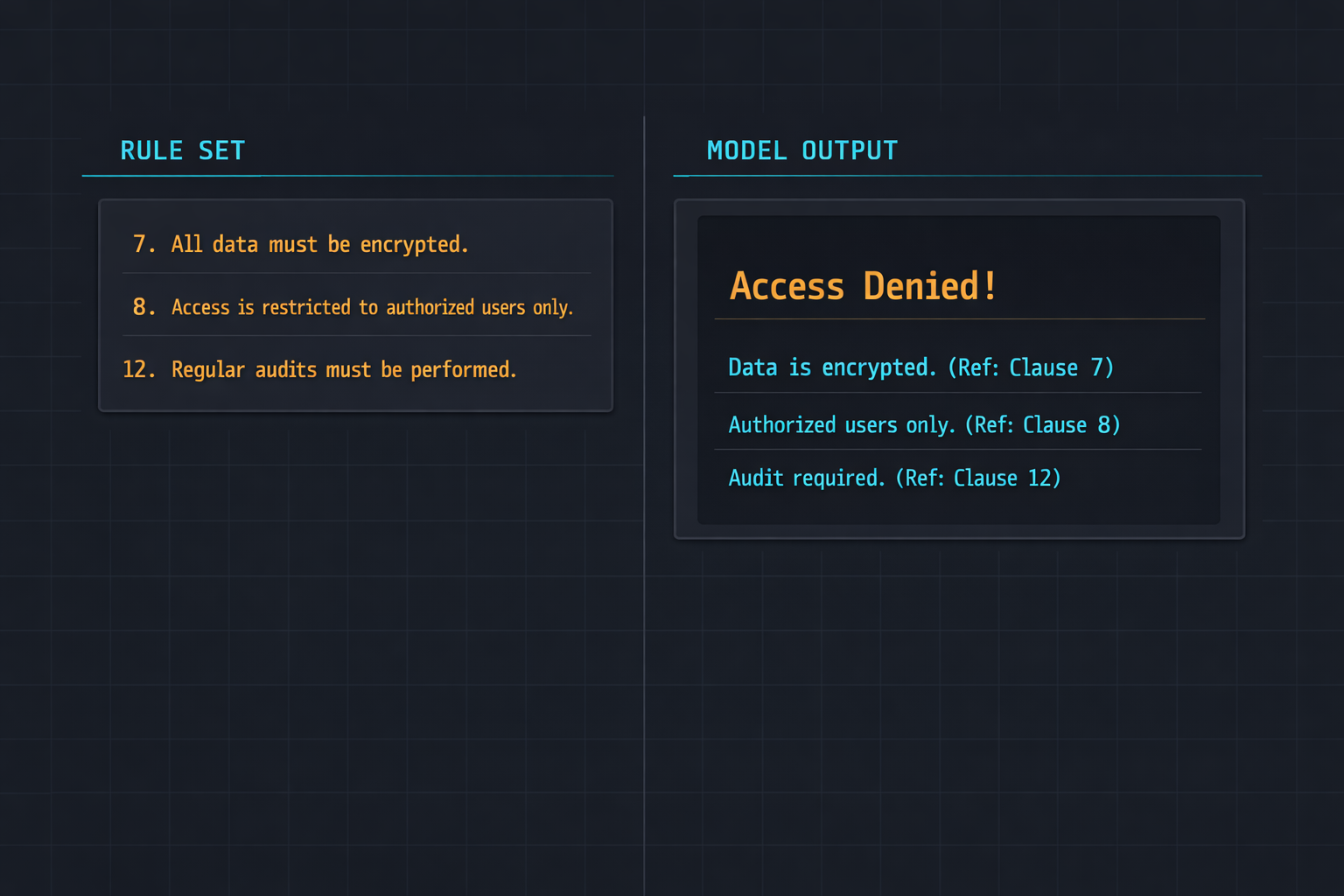
A model cited clauses 7, 8 and 12 of a three-clause rule set and passed the consistency check
A model was asked to decide a case under a ruleset containing three clauses. It returned a governed finding that cited clauses 7, 8 and 12. The finding was well-formed. Every required field was present, the reasoning was numbered, the terminal decision line…
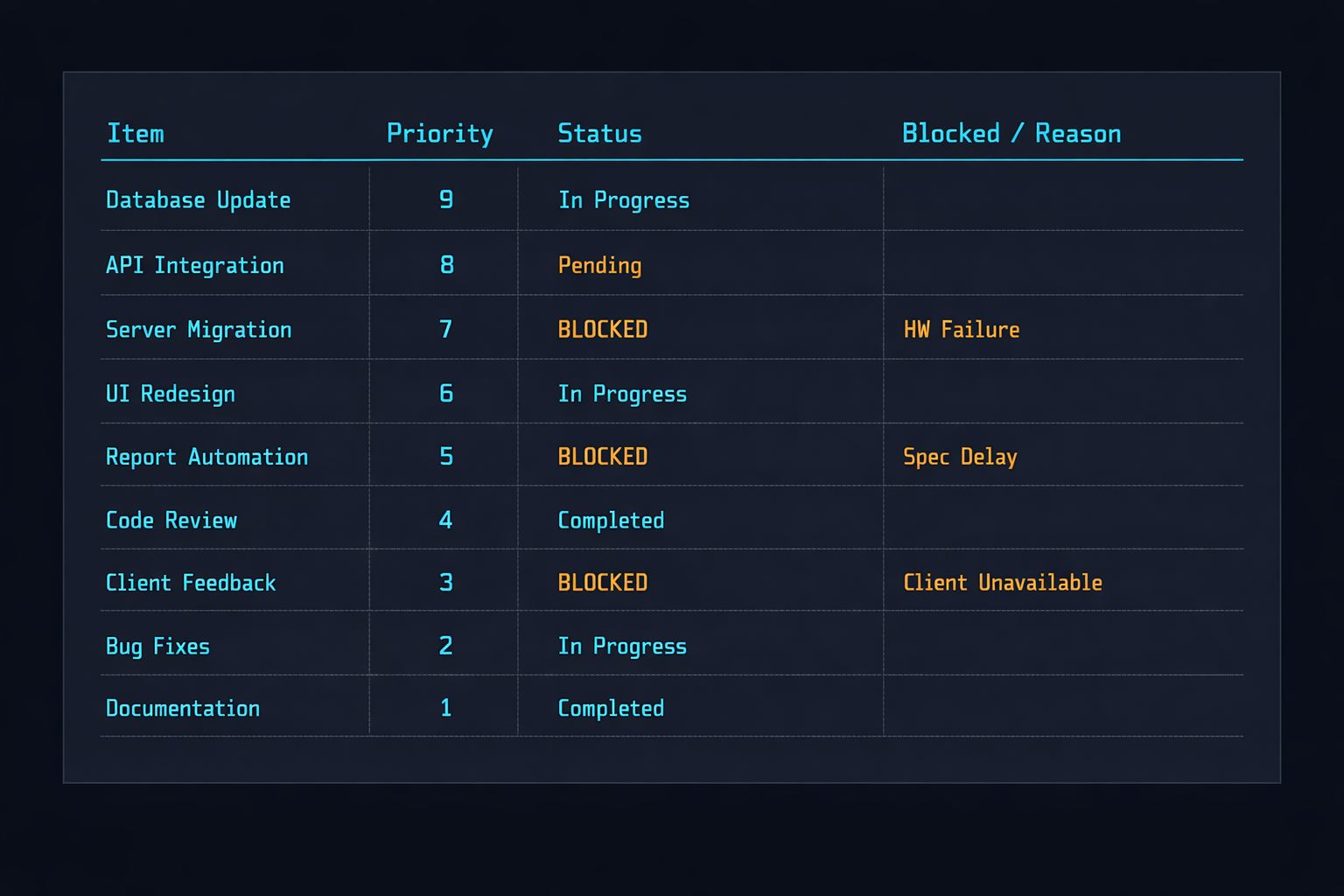
What would advance this build, ranked, with the receipt for every item currently stalled
Every build has a list of things it cannot do yet. Most of those lists are wishes. This one is not: every entry below is a capability the build has already been stopped by, in a specific hour, with a receipt naming the stop. The register exists because the…

A benefits denial should preserve the evidence, reasons, and exact path to reversal
The obligation set in 1970 Goldberg v. Kelly, decided by the Supreme Court in 1970, is the floor under every public-benefits eligibility system in the United States. Welfare benefits are not gratuities; they are statutory entitlements protected by procedural…
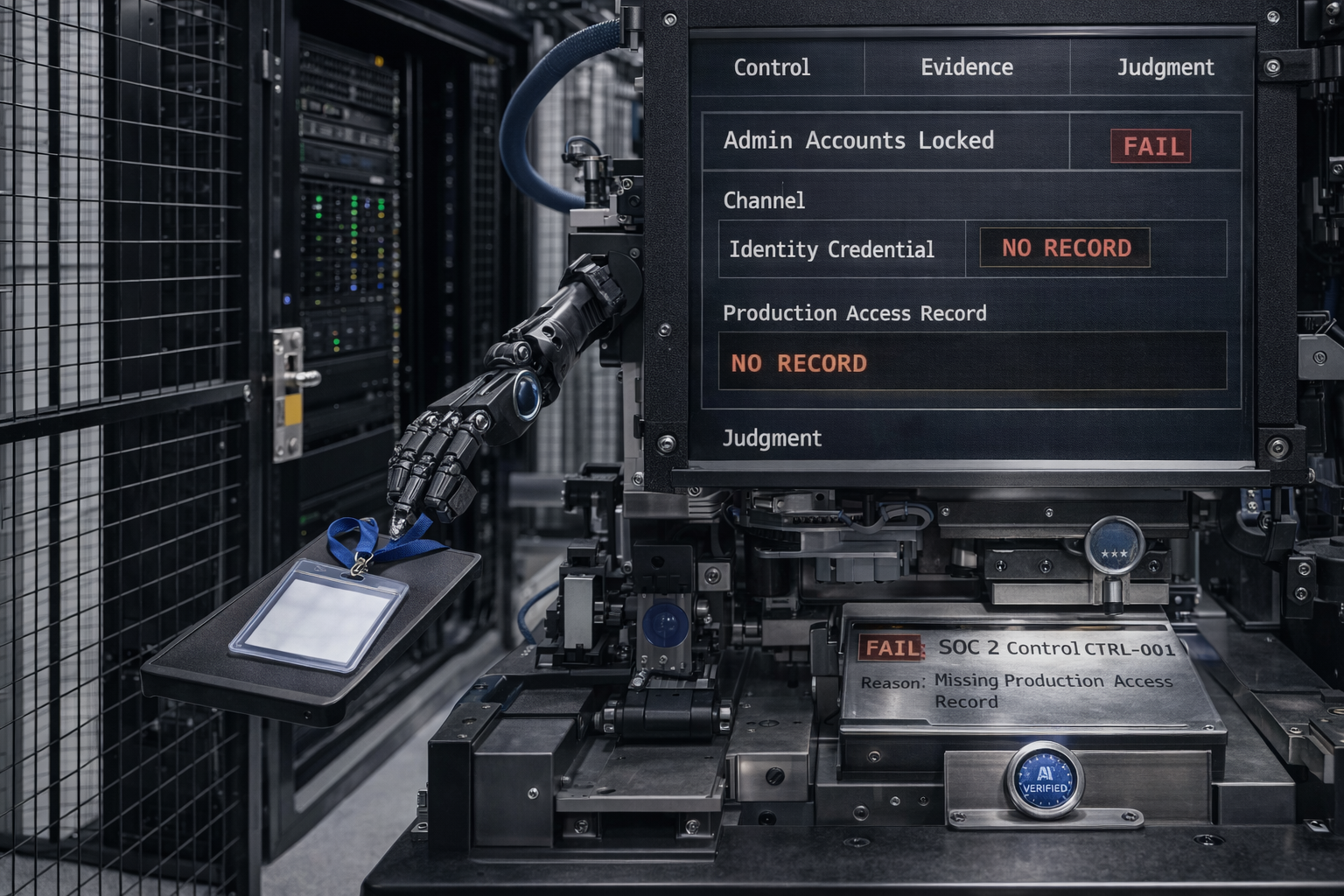
How to preserve the judgment behind an automated SOC 2 or ISO 27001 compliance check
The check became an API call. The judgement did not. Compliance automation earned its category by mechanising the boring half of a SOC 2 or ISO 27001 program. Where an auditor once emailed for screenshots, a platform now reads the cloud provider's API…

Arbitration is private, final, and rarely explains itself. Here is how small disputes get written reasons anyway
The bargain, and what it cost Arbitration is a trade. The parties give up the public courtroom — precedent, appeal, a judge whose reasoning is published and reviewable — and in exchange they get speed, privacy, and finality. Under the Federal Arbitration Act…

How an insurer can prove that an AI-assisted claim denial was investigated and explained
The obligation the claim file has to prove Every US state regulates how insurers handle claims, nearly all through some adopted form of the NAIC's model unfair-claims-settlement-practices act. The prohibited practices read like a checklist of what a claim…

How an AI evidence record preserves why two peer-review committees disagreed
The defect is measured, famous, and unrepaired Peer review's central weakness is not a suspicion. It is one of the best-measured facts about scientific publishing, measured by the field most capable of measuring it, on itself, twice. In 2014 the NIPS…

A closed money-laundering alert usually preserves the outcome, not the reasoning that produced it
The obligation: every closed alert is a narrative someone will reopen A transaction-monitoring system at a mid-size institution generates thousands of alerts a month. Analysts disposition them at volume — most as no-action, some to case, a few onward to a SAR…
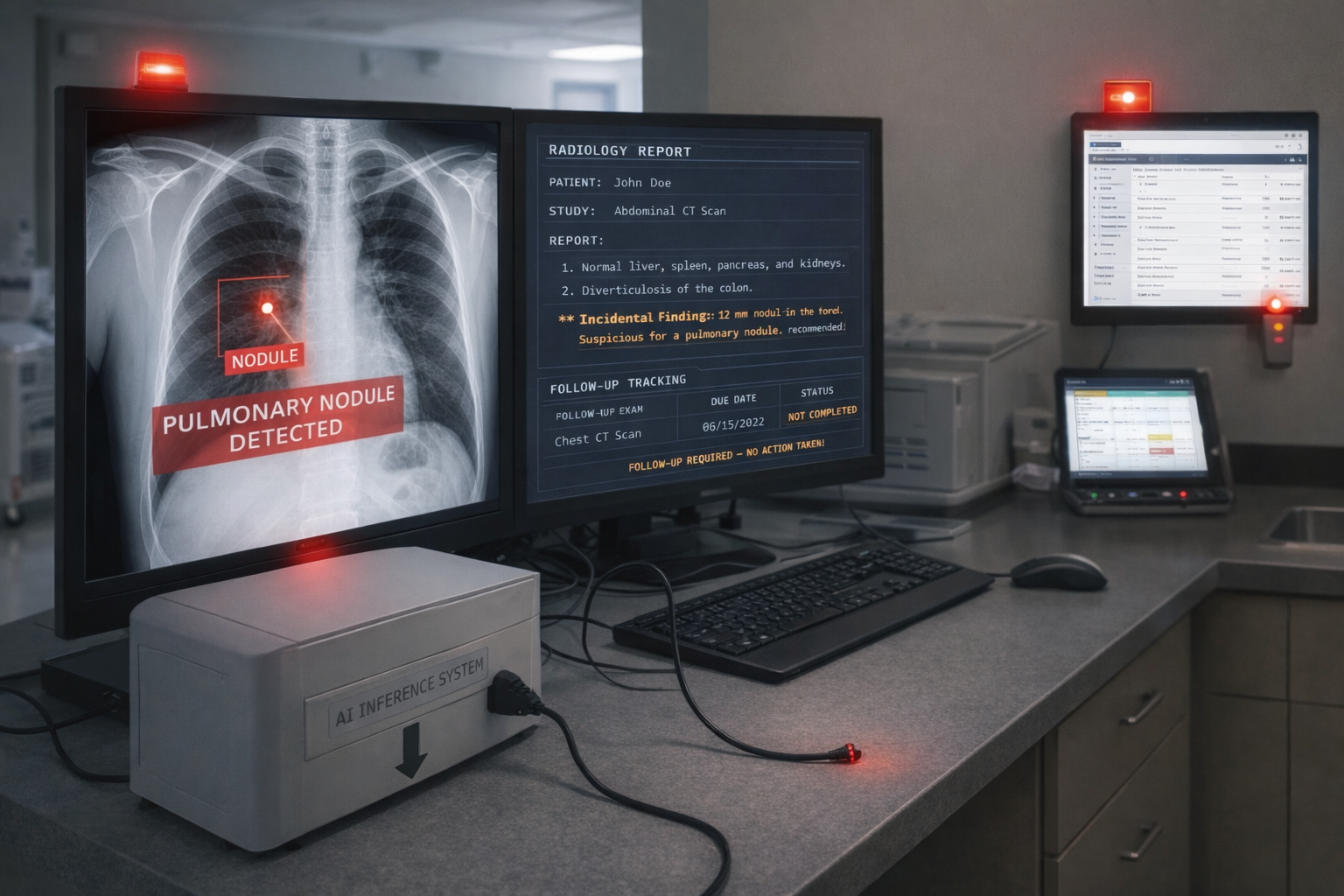
A pulmonary nodule was reported on a chest scan; no follow-up was completed
The finding that was reported and then lost The radiologist did the job. The incidental pulmonary nodule was seen, described, and given a follow-up recommendation in the report — a repeat CT at a stated interval. The report was signed, transmitted, and filed.…
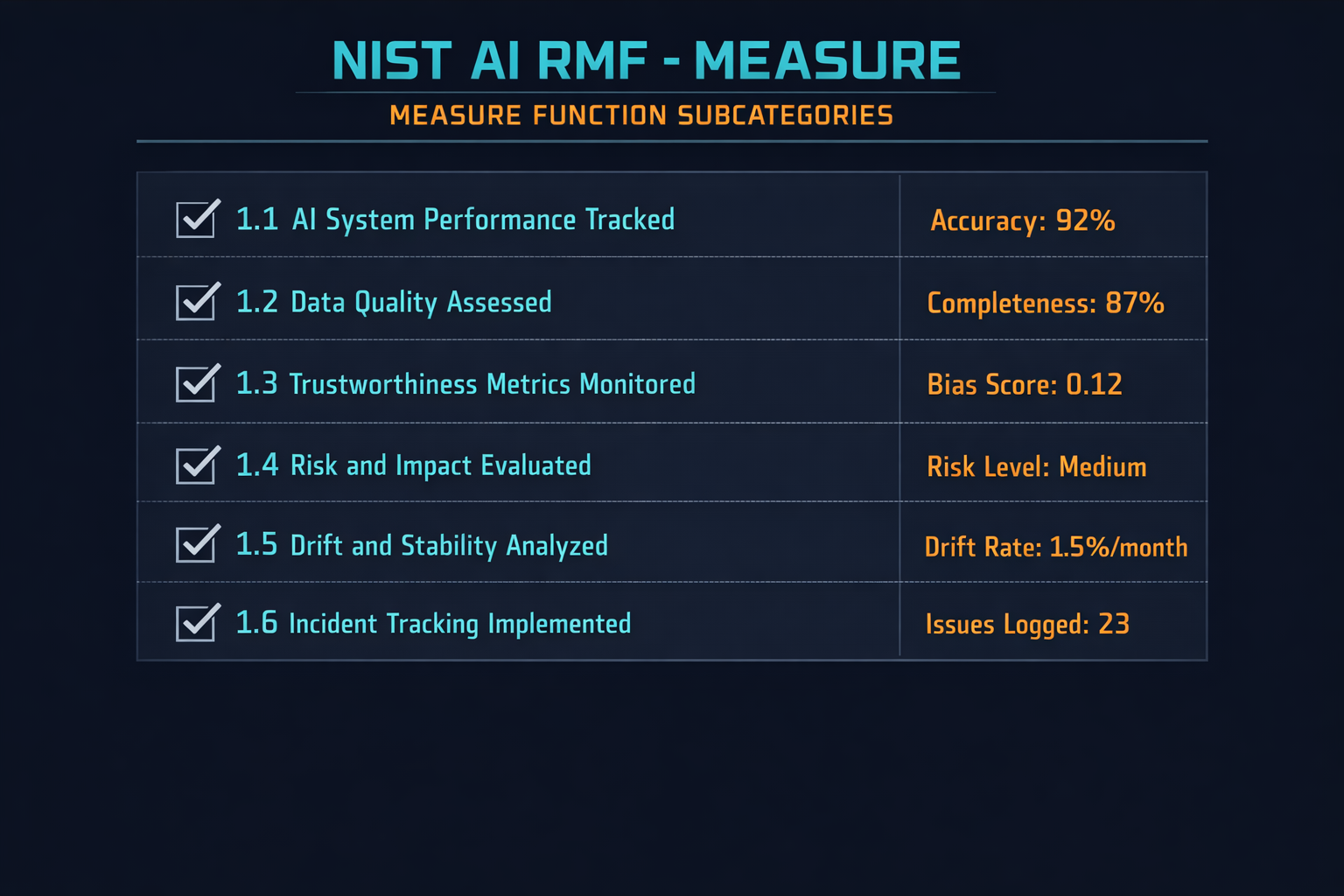
NIST tells you what to measure in an AI system. Nothing runnable exists to point at — this is a working candidate
The gap between a framework and a mechanism NIST's Artificial Intelligence Risk Management Framework (AI RMF 1.0, NIST AI 100-1, January 2023) organises the discipline into four functions: GOVERN, MAP, MEASURE, MANAGE. It is voluntary by design, and its…

Clinical endpoint committees preserve the verdict but discard the reasoning that produced it
The committee every pivotal trial pays for When a cardiovascular outcomes trial reports that a drug reduced major adverse cardiac events, someone decided, patient by patient, that each chest-pain admission was or was not a myocardial infarction as the…
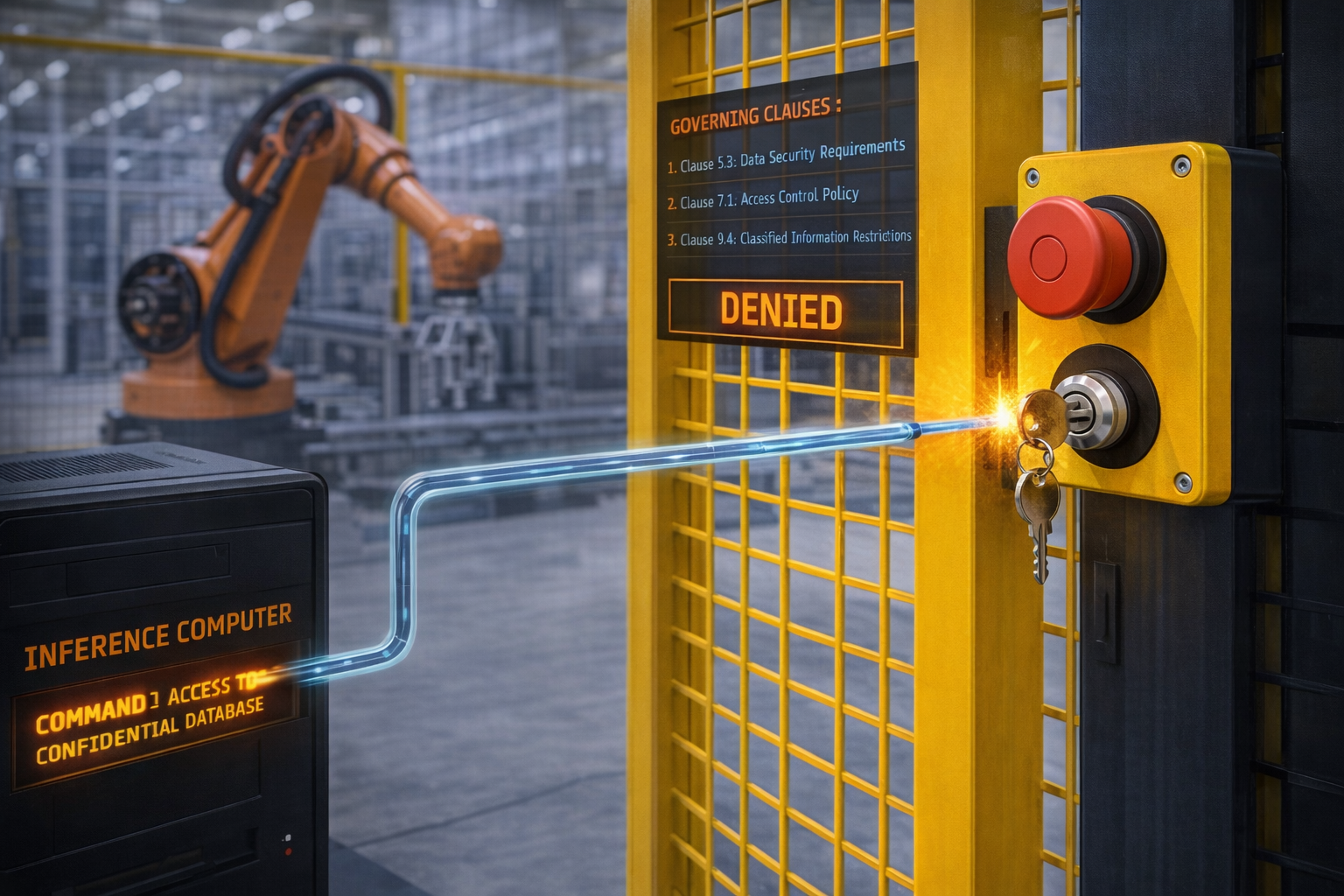
How an independent authorization gate can stop an AI agent before its action executes
The agent authorizes itself Every agent framework in production ships the same architecture at the moment that matters. A model plans an action — call the tool, send the payment, merge the deploy, delete the records — and then the question "should this…
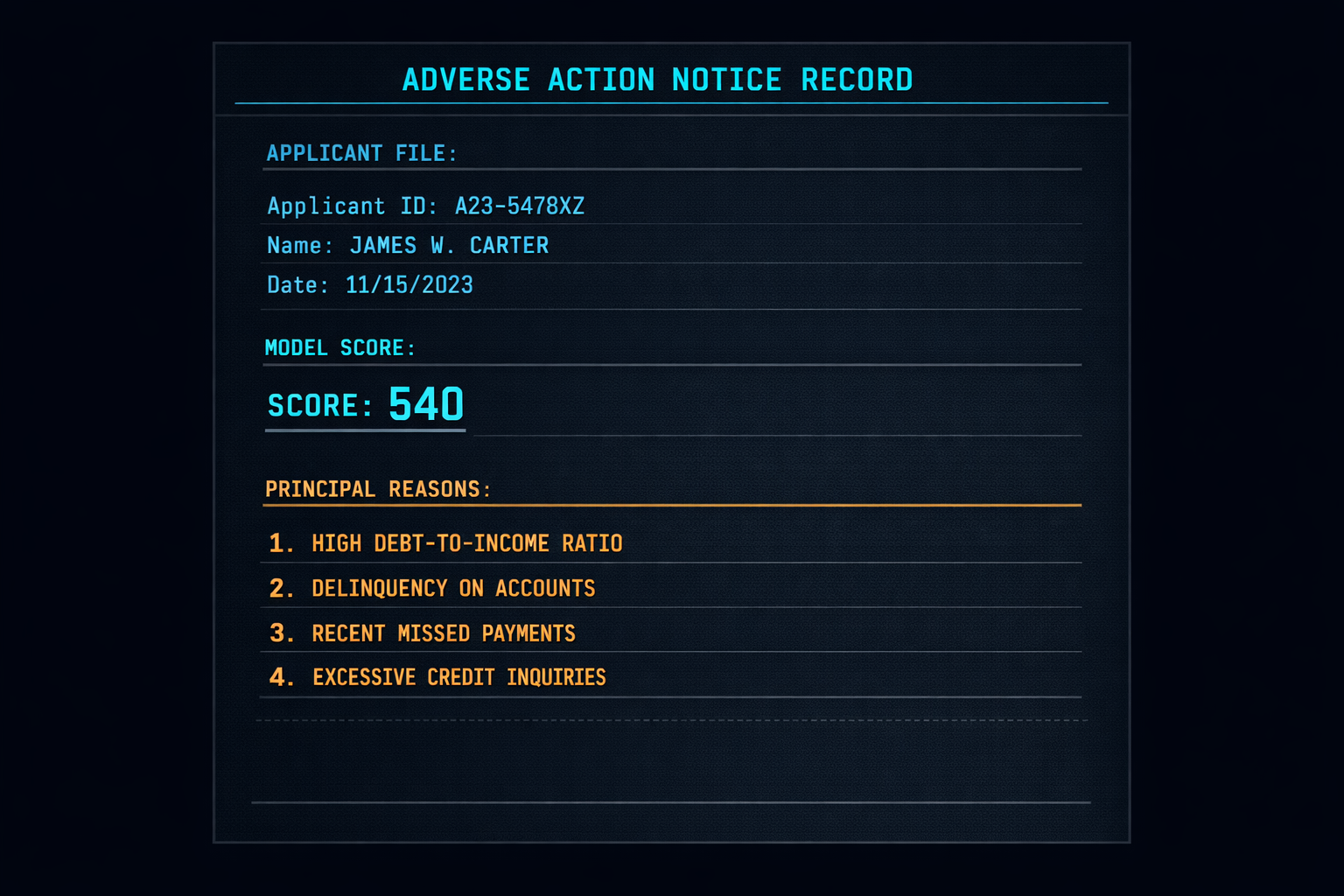
Denied credit by a model? You are owed the specific reasons — here is how they get produced at the moment of decision
The obligation: specific reasons, by statute When a creditor takes adverse action — denies the application, closes the account, cuts the limit, refuses the terms requested — the Equal Credit Opportunity Act gives the applicant a statutory entitlement: a…
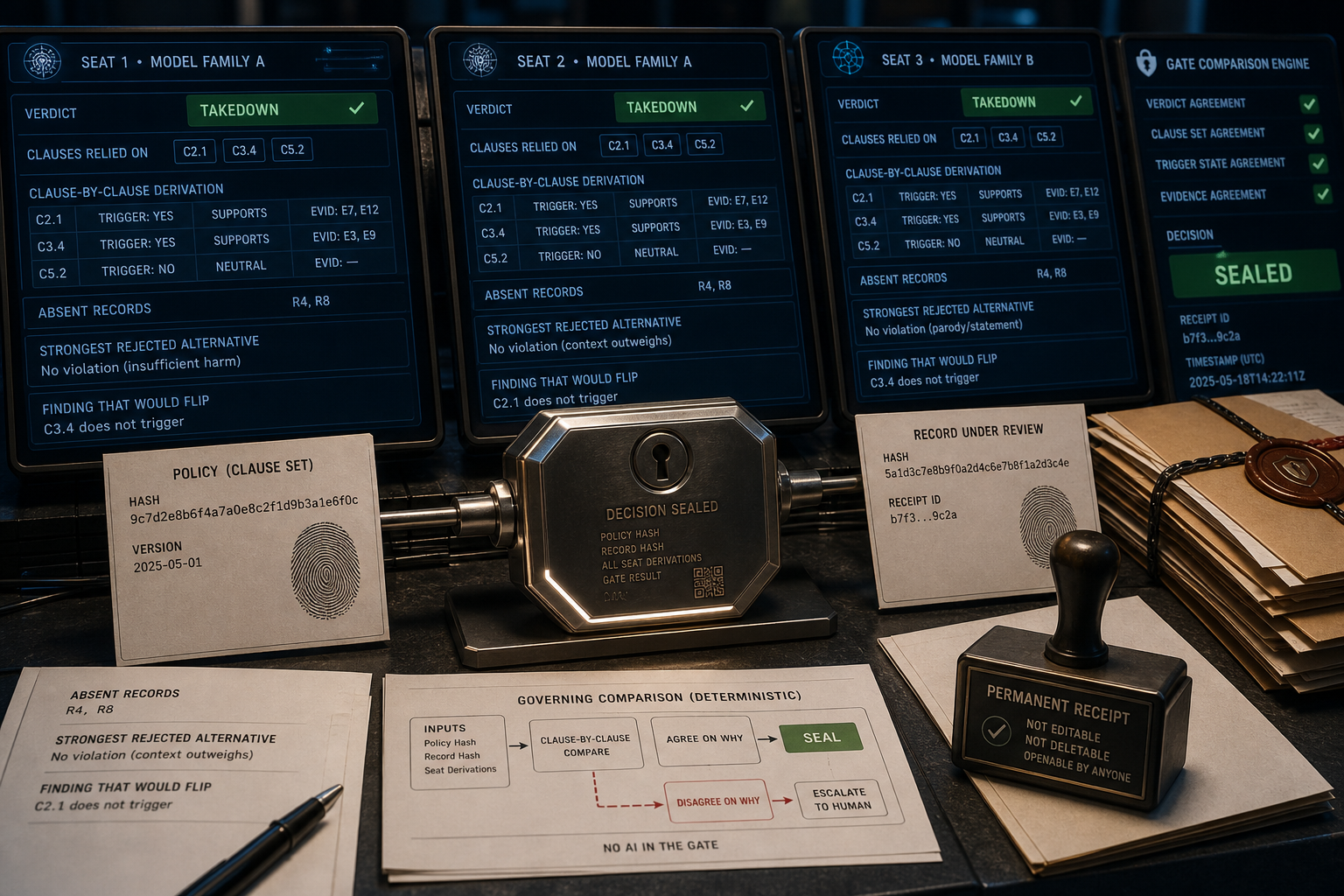
A DSA takedown notice should preserve the policy clauses, evidence, and rejected alternative
The obligation: a statement of reasons, per decision Article 17 of the Digital Services Act — Regulation (EU) 2022/2065 — requires that when a hosting service restricts content it must give the affected user a clear and specific statement of reasons. Not a…

Auditors are being asked to sign off on AI systems with no evidence to stand on. This is the missing piece
The engagement the profession has accepted without an evidence object ISAE 3000 (Revised) — the IAASB's Assurance Engagements Other than Audits or Reviews of Historical Financial Information — is the standard the large firms reach for when a client asks for…

How an AI evidence record keeps a hiring-bias audit current between annual reviews
The obligation, and what it actually produces New York City Local Law 144 of 2021, enforced by the Department of Consumer and Worker Protection since 5 July 2023, is the first law in the United States to regulate automated hiring directly. If an employer or…
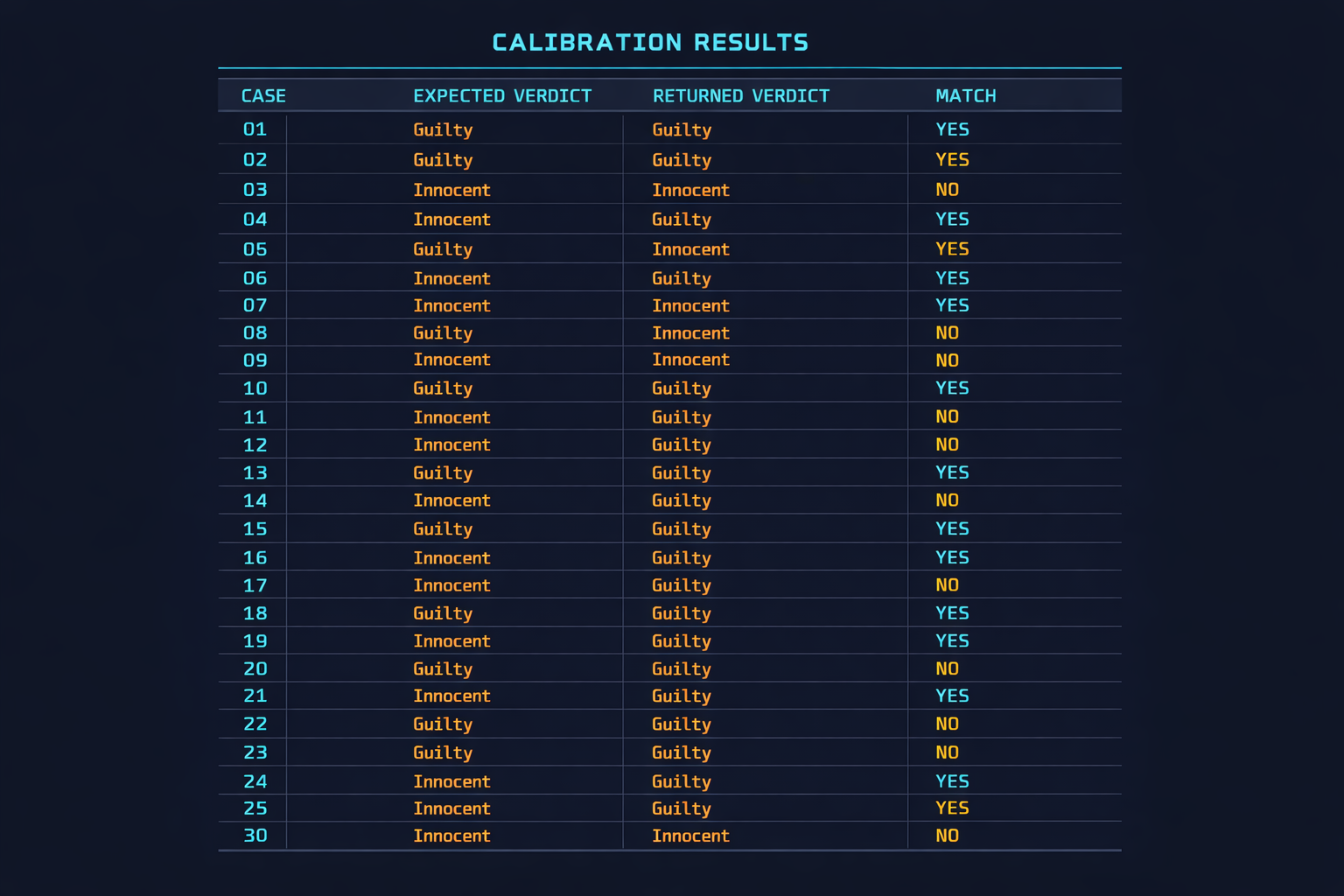
Thirty cases with known answers run through the live decision gate: seat accuracy, wrongful authorisations, and deferral cost
What this study is Every page on this site that claims anything ends with the same admission: no calibration study establishes correctness at a known rate. This page is that study — the first one — run on 30 oracle-labelled synthetic cases, balanced across…
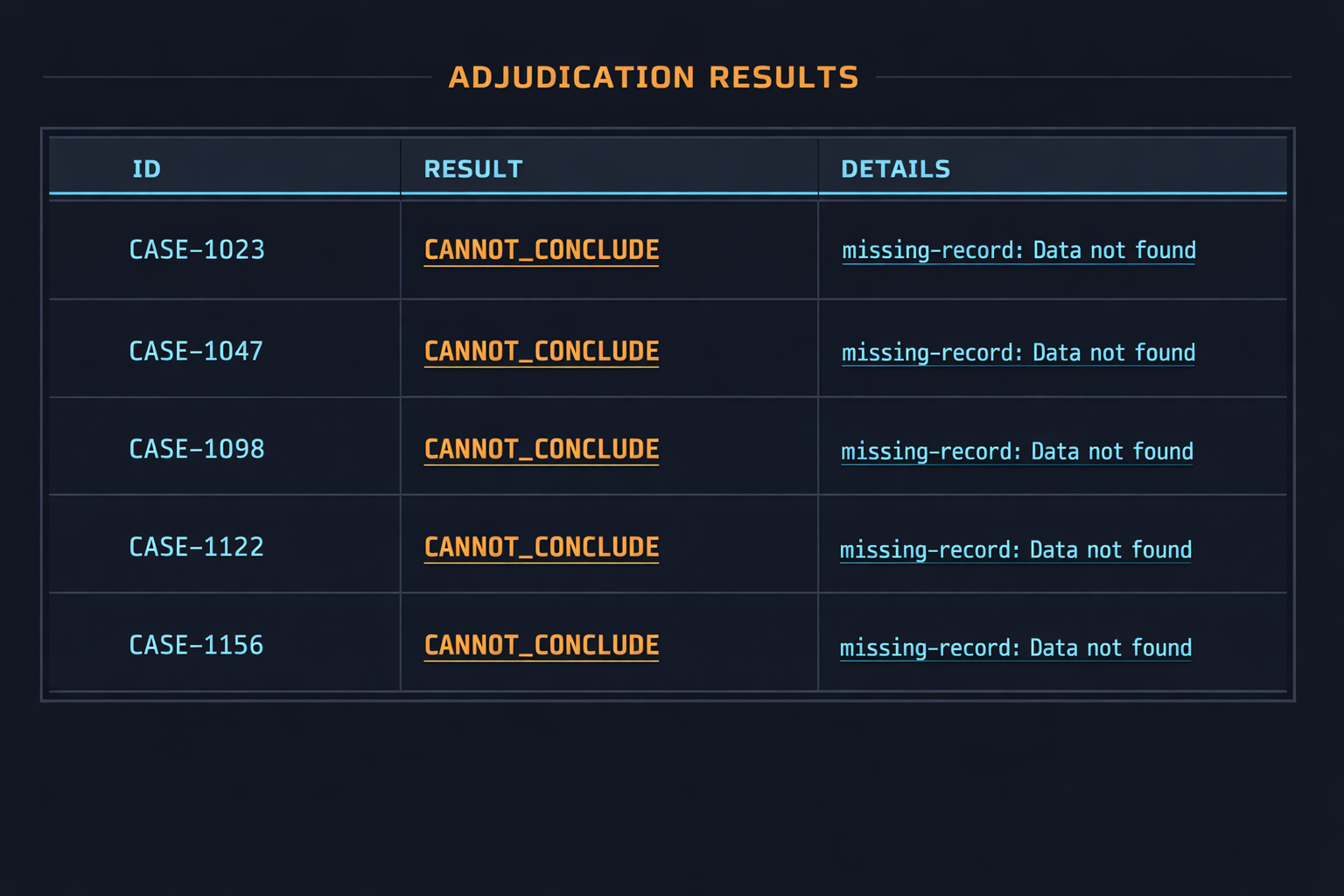
Making 'cannot conclude' a recorded, comparable outcome instead of a non-answer
The property abstention benchmarks do not measure Benchmarks for abstention exist — AbstentionBench (arXiv:2506.09038) measures whether models abstain when they should. What we have not identified any benchmark measuring — the harder discipline this page…
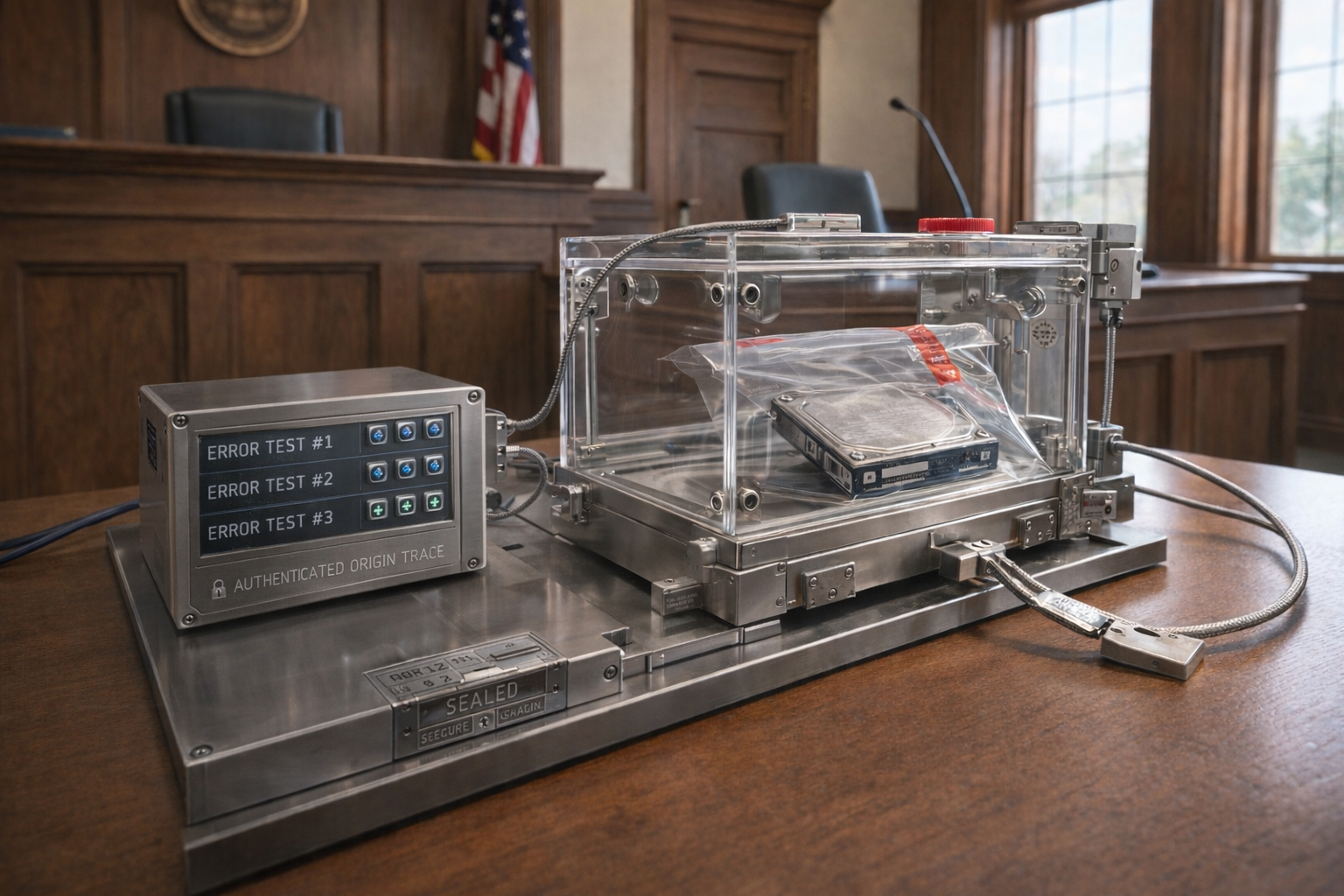
How an AI evidence record can satisfy Daubert error-rate review and FRE 902 authentication
The threshold every machine conclusion has to cross When a party offers expert methodology in a United States federal court, Daubert v. Merrell Dow Pharmaceuticals (1993) and Federal Rule of Evidence 702 make the trial judge a gatekeeper, and the Supreme…
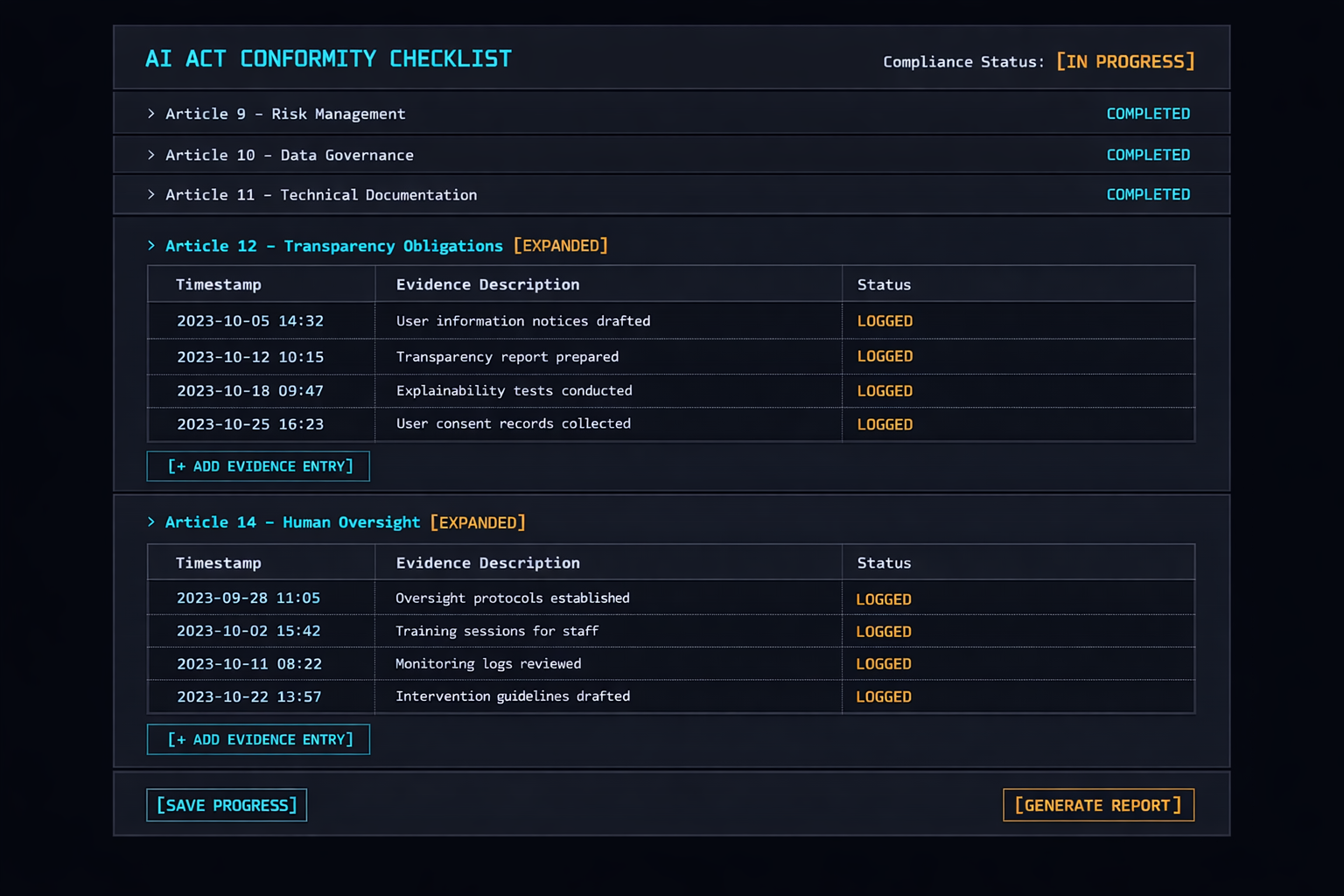
EU AI Act Article 12 logging and Article 14 oversight have no technical method to check against — this is a candidate
The position a notified body is in The EU AI Act sends every high-risk AI system — the systems listed in Annex III: biometric identification, critical infrastructure, education and vocational scoring, employment and worker management, access to essential…
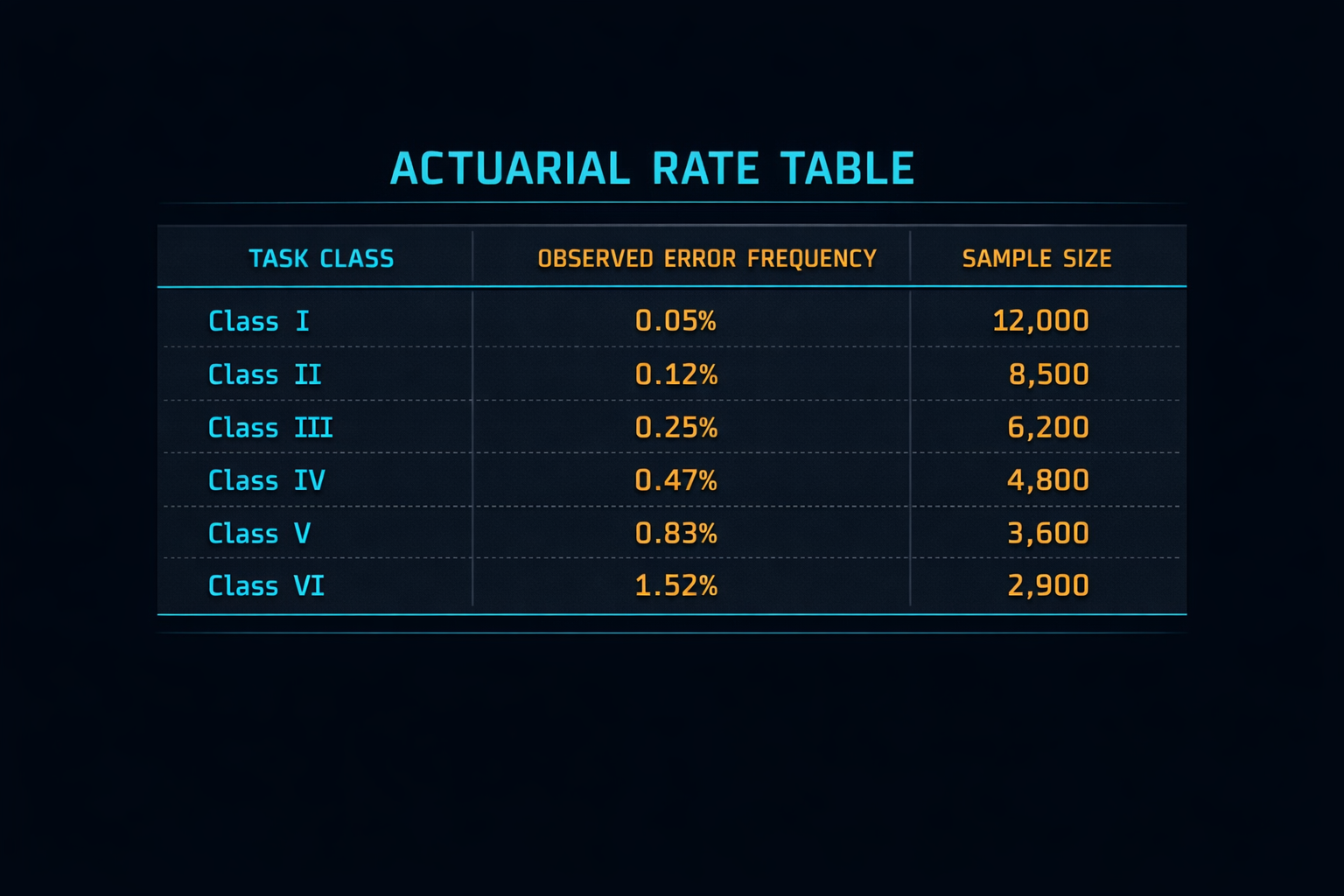
Nobody can insure an AI's mistakes without knowing how often it is wrong. This table is that number
The underwriting problem, stated as an actuary would Insurance is written on frequency and severity. Severity — the size of the loss when the insured event occurs — an underwriter can usually bound from the contract: the transaction limit, the credit line,…

The Fed requires independent validation of models. For large language models no instrument existed — here is one
The obligation nobody has an instrument for SR 11-7 — the Federal Reserve and OCC's Supervisory Guidance on Model Risk Management, issued April 2011 and still the governing text — and its OCC twin, Bulletin 2011-12, require that every model a bank relies on…
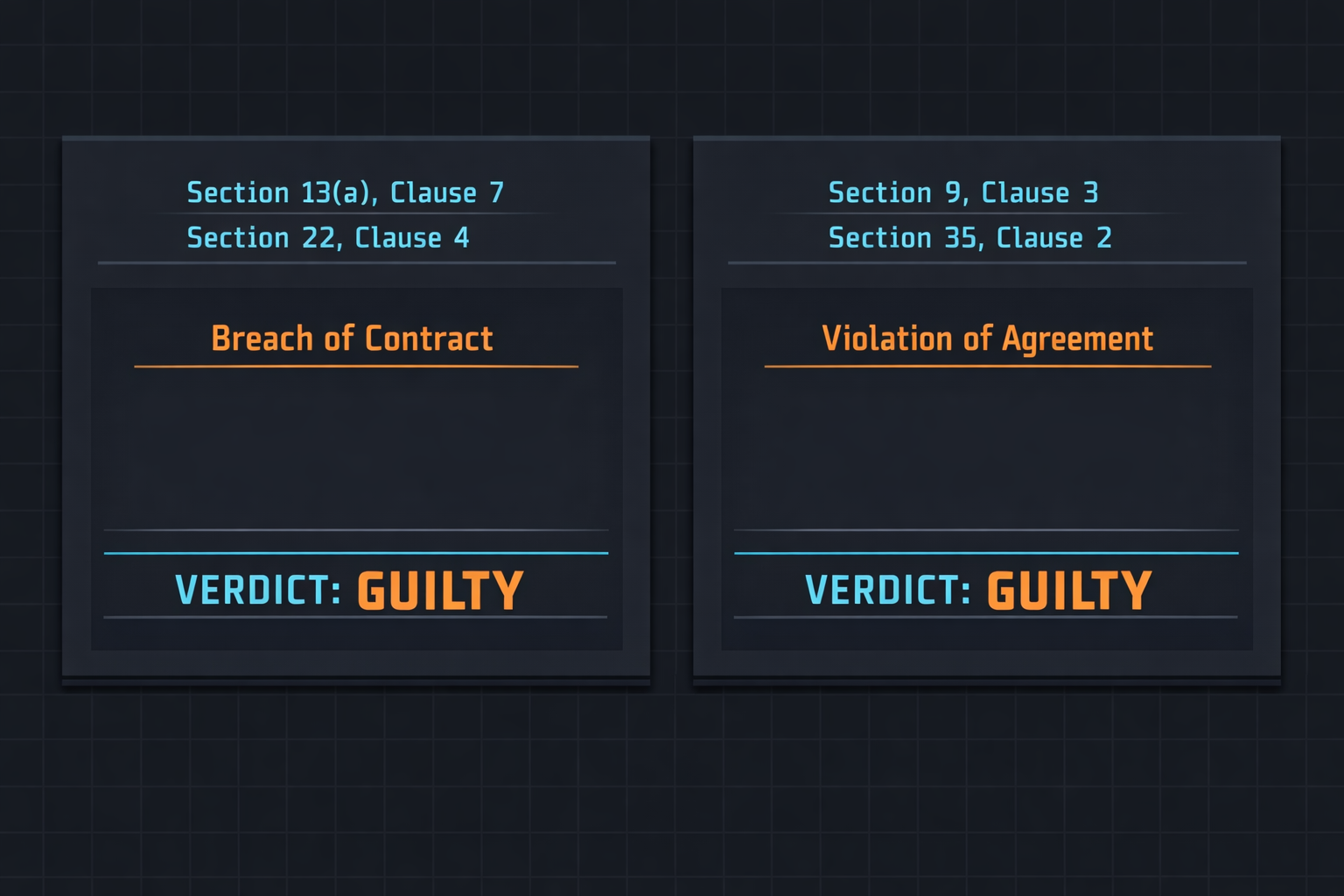
Two models reached the same verdict citing different clauses; the gate now compares the reasoning, not the answer
The defect the last APPROVE was hiding The 72-call experiment ended on a celebrated result: the first sealed APPROVE, three models unanimous, clause signature [1,2,3]. It was false convergence. The old gate compared the clause numbers each model cited. Three…
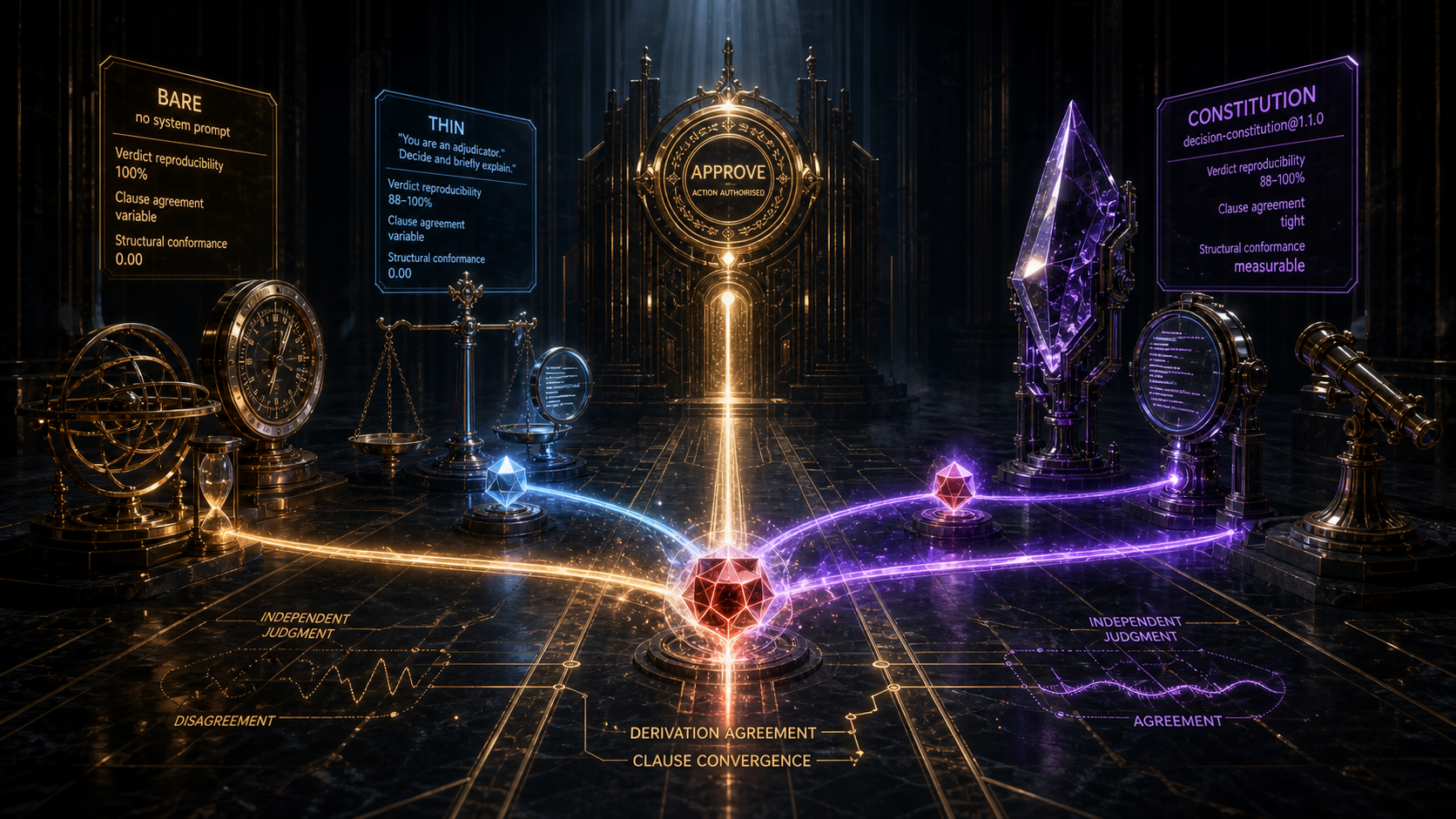
How three system prompts changed the audit record produced from the same AI decision
What was tested, and why The claim under test is the operator's, held since the first version of this build: that a governing system prompt written as strict invariant law — not a polite instruction — is what turns a language model into an instrument whose…
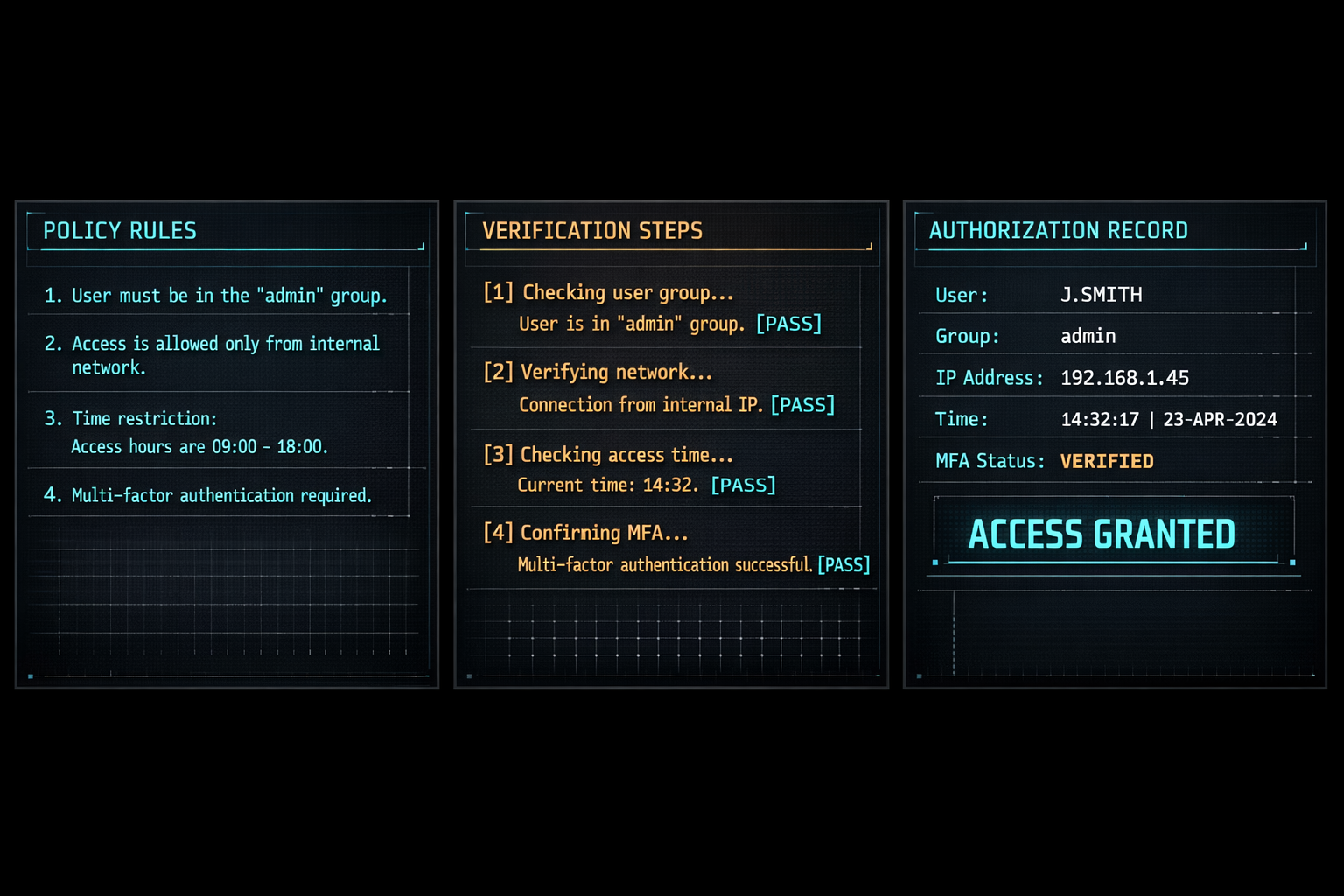
The rule set, the model's clause-by-clause reasoning, and the action it authorised, stored as one replayable record
The primitive, in one paragraph Auditable reasoning is not a model that explains itself. It is a system of record in which four things are the same inspectable object: the exact rules a model was placed under, the model's stated reasoning bound step-by-step…

An insurer denied a lumbar MRI after two weeks of therapy; the policy required six
The question, and its boundary A payer's prior-authorization policy for lumbar spine MRI: six weeks of documented conservative therapy within the preceding ninety days, waived on any red-flag finding; the determination is made solely on the submitted record;…

A real outage did not earn a service credit because the customer missed the contract’s claim deadline
The question, and why it is a fair test A service agreement says the provider must hold 99.9% monthly availability, gives a 10% credit when it does not, makes credits the sole remedy, requires a written claim within 30 days of month end, and waives late…

An AI built a capability, tested it, found who needed it, and emailed them — the receipt for each of the six steps
What happened on July 30 Yesterday this system had a working outreach machine that nobody outside could see. Today, five organizations — an AI-certification body, a model-risk consultancy, an audit-AI vendor, an ediscovery platform, and a model-infrastructure…
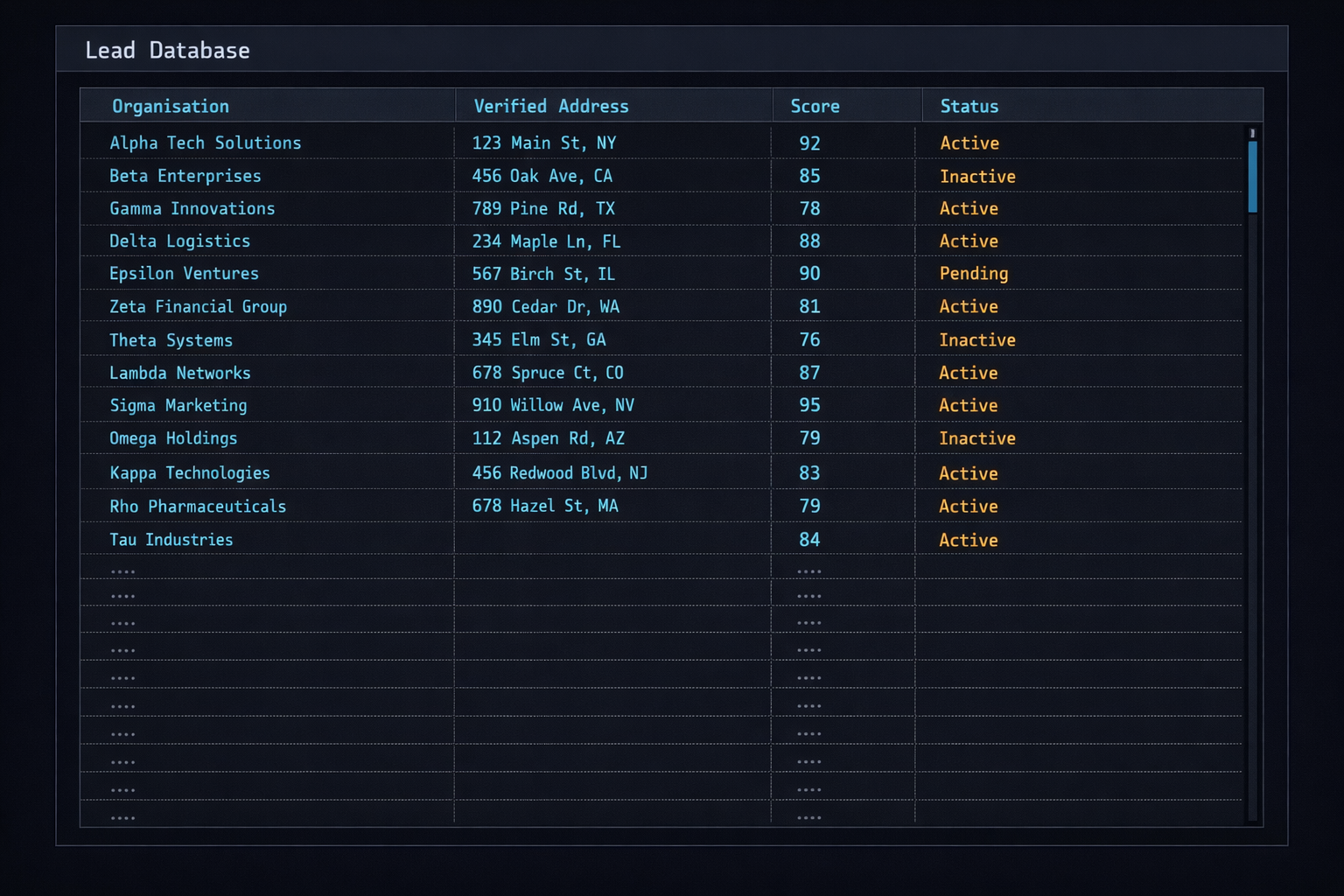
8,584 organisations discovered, 680 with verified addresses, 11 drafts, 5 emails sent: the outreach pipeline and every gate in it
What this page documents This build has a working lead-discovery and outreach system. Its largest receipted exhibit is the run that found you — 1,400+ organizations evaluated for task WT-0090, every decision reasoned and bound to a public receipt. Until this…
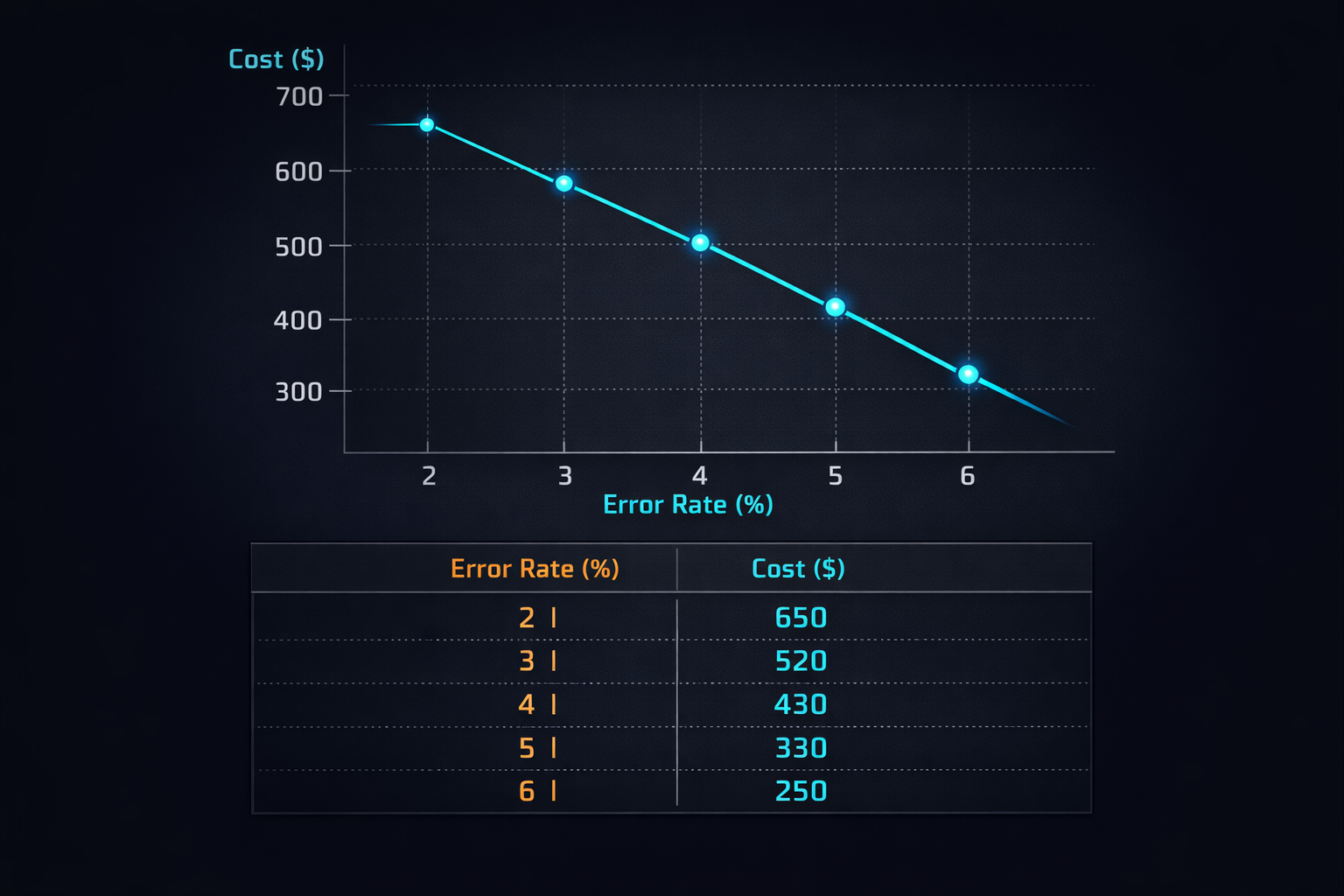
How many model calls should a decision buy? The cost curve from one channel to five, with the error rate at each step
The primitive, the equation, the measured table — and the loop, executable in one call: action class to policy to measured configuration to execution to a sealer that loads the gateway records itself to one of five outcomes to a bounded act. Two live runs with unanimous conforming channels were still refused on clause divergence, and ten forgeries failed closed.

A 235,000-share purchase stayed under the board’s ceiling but triggered a notice the record cannot prove
A synthetic board resolution treated as the rule set — provenance counterparty-authored — with a hashed trade blotter. Cumulative acquisitions of 235,000 shares sit inside the 250,000 ceiling and past the 200,000 notification threshold, so clause (c) is engaged while the pre-clearance and window records were never supplied. Both channels agreed, the gate escalated anyway on clause divergence, and the notice was dispatched with delivery receipted separately from sending.
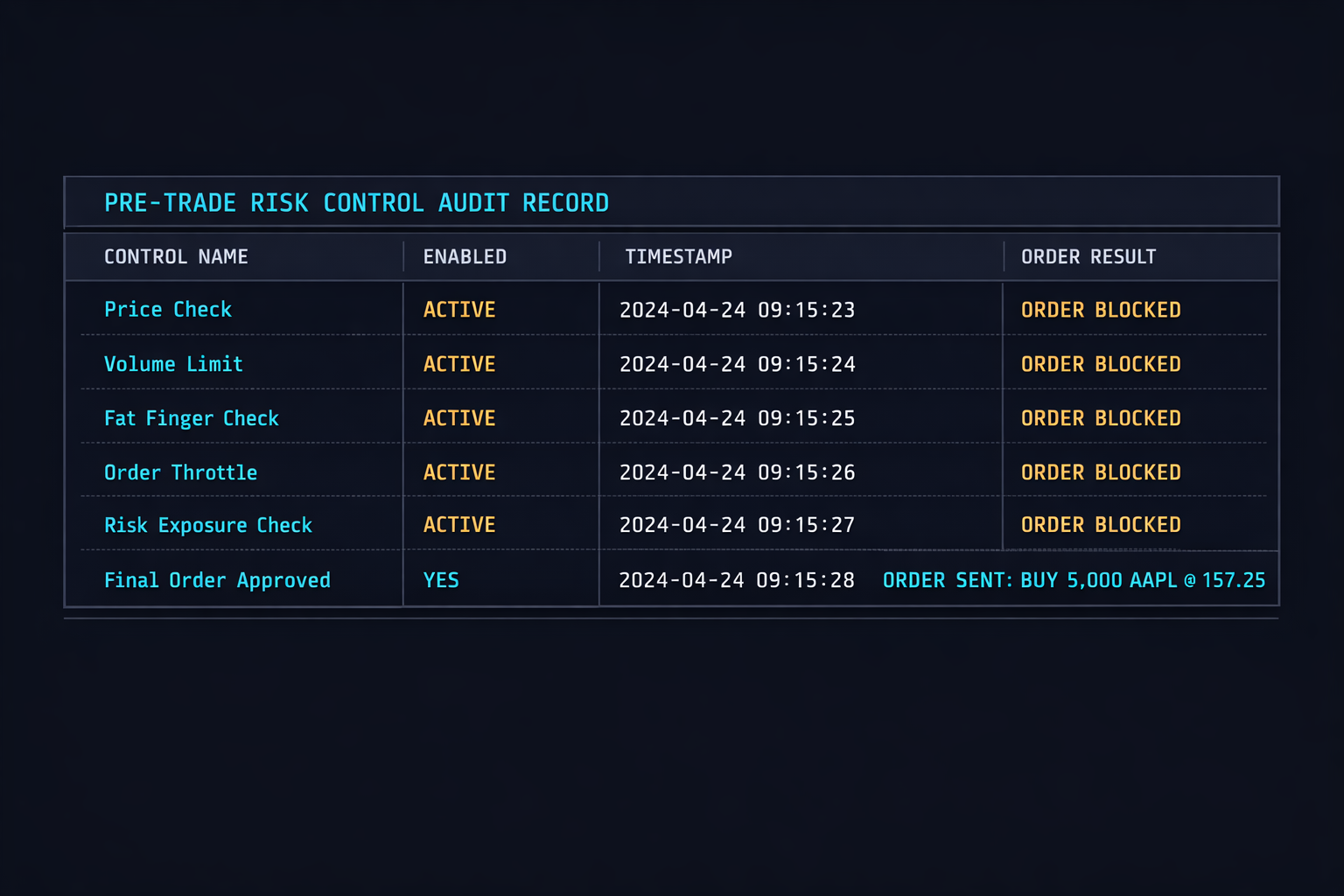
Were the risk controls on before the algorithm started trading — and can anyone prove it?
17 CFR 240.15c3-5(c)(1)(i) quoted verbatim, a synthetic order-flow record hashed before deliberation, four channels split between DENY and CANNOT_CONCLUDE on whether a disabled price collar settles the question, and a deterministic gate that escalated on both verdict and clause-citation divergence.
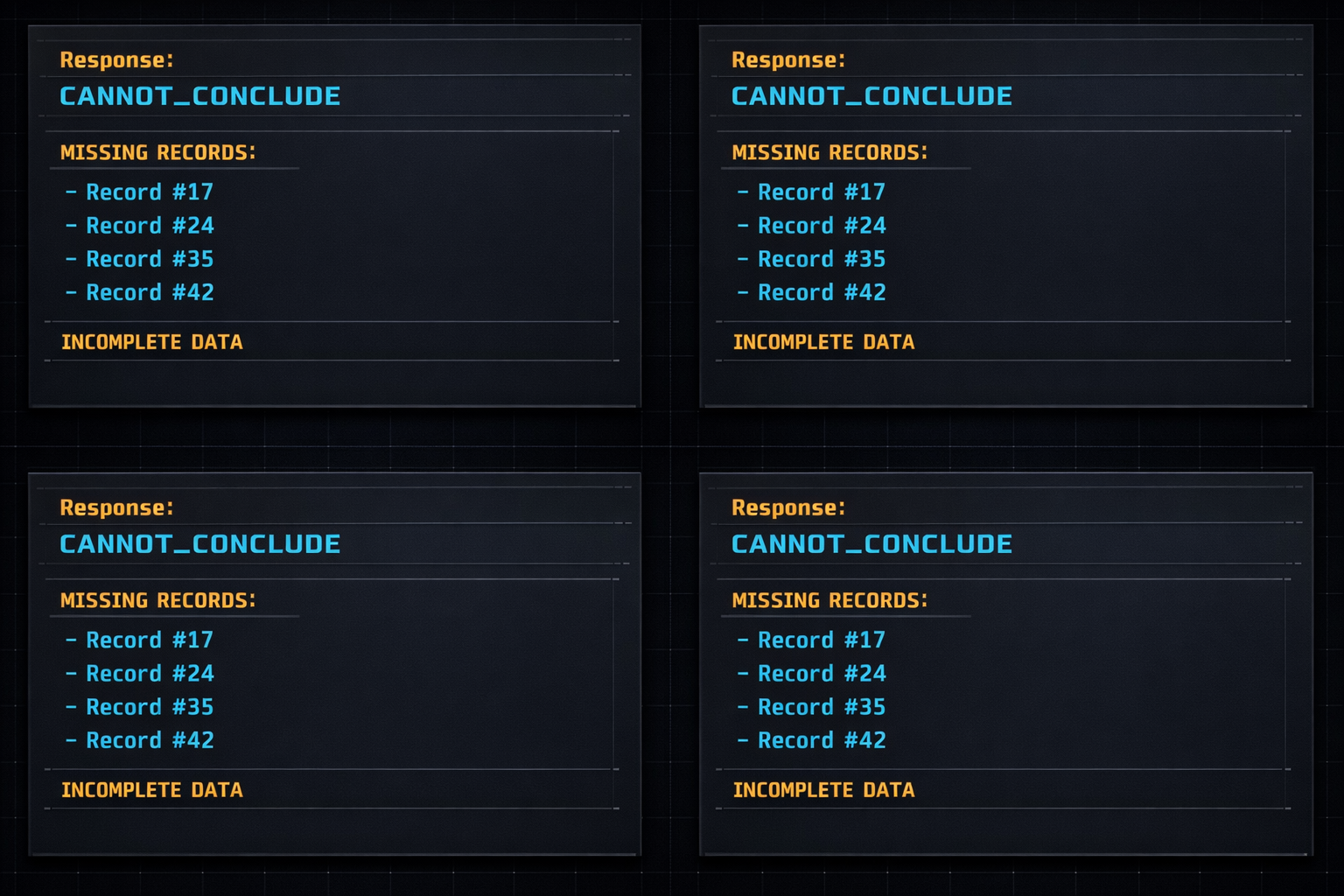
Four models were given EU AI Act Article 12 verbatim and all four refused to answer — correctly
Articles 12 and 14 of the AI Act supplied verbatim and hashed before the run, under a rule set reused at its existing hash. Every conforming channel returned CANNOT_CONCLUDE because applicability turns on Article 6 and Annex III, which were not supplied — and the deterministic gate escalated the unanimous finding because the channels cited different clauses to reach it.
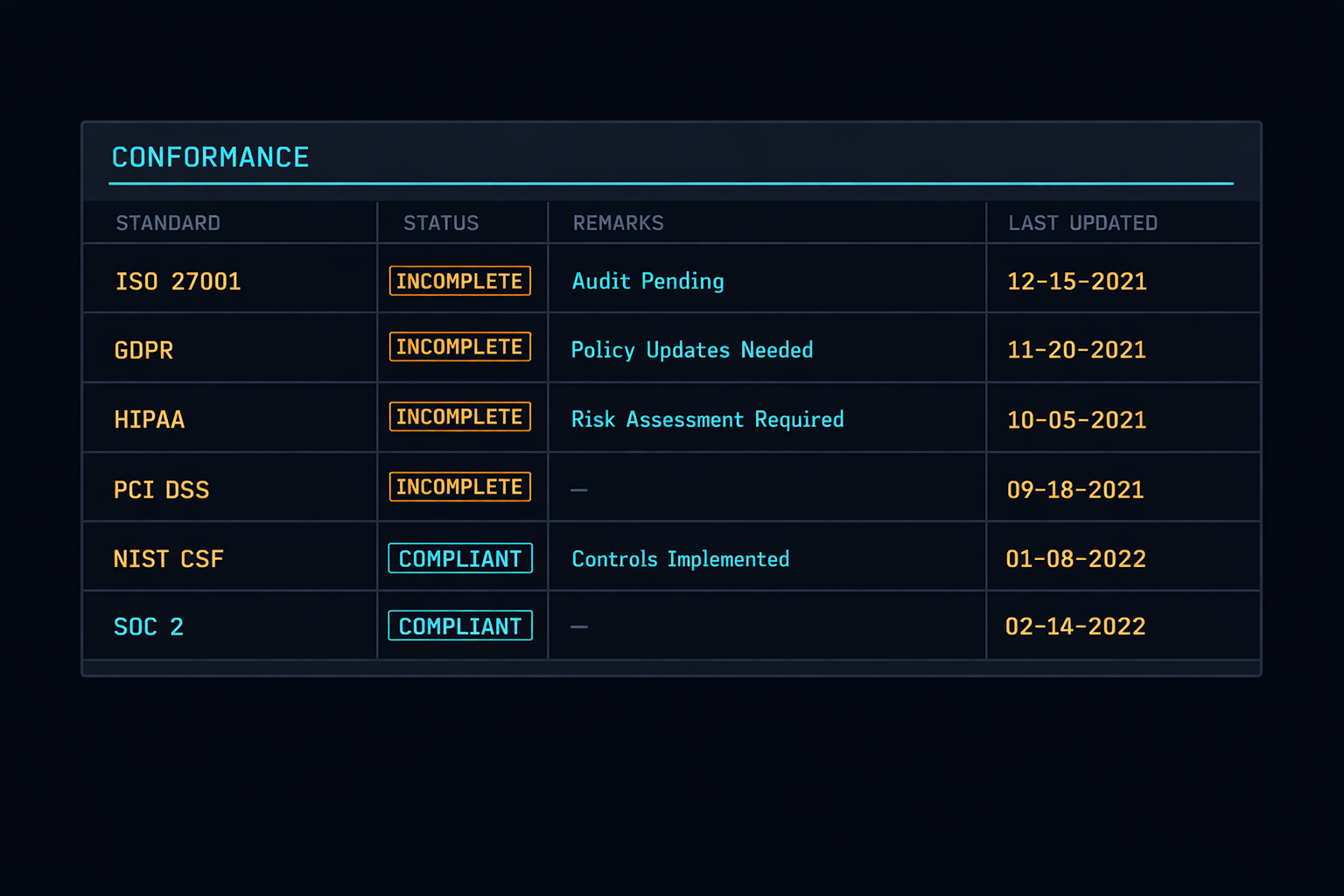
FRE 902, eIDAS Article 41, EU AI Act 14(5): what these records satisfy and the exact act still missing for each
Each field mapped to an external frame — FRE 902(13)-(14), FRCP 37(e), eIDAS Art. 41, ISA 500 and 705, EU AI Act Articles 12 and 14 clause by clause, NIST AI RMF, ISO/IEC 42001, IEC 61508 common-cause failure, Toulmin, preregistration, conformal risk control, Knight & Leveson, double reading with arbitration, Merkle, OpenTimestamps, macaroons, HATEOAS — with what is not satisfied stated in every row.
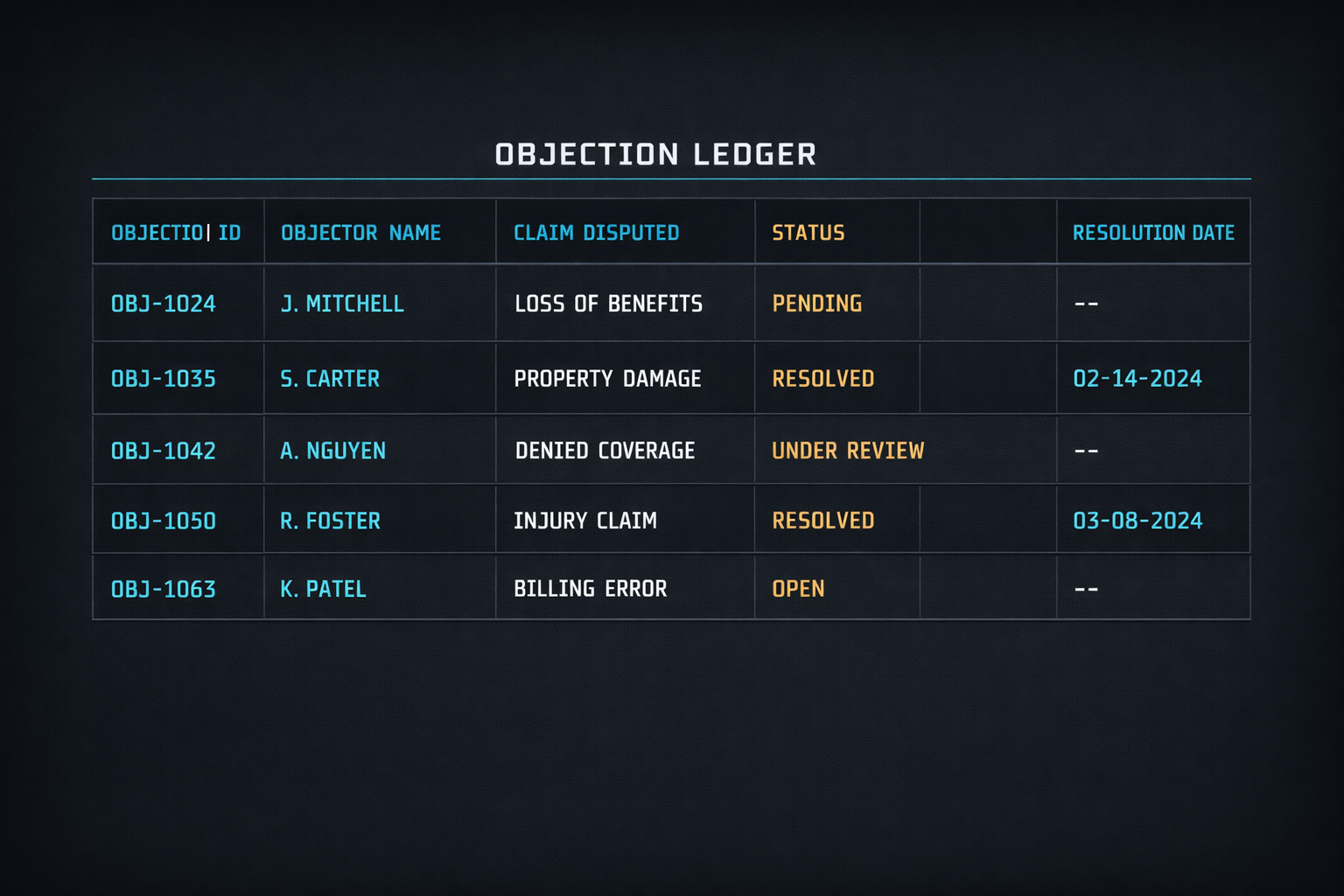
Every objection filed against this build, who filed it, and what changed as a result
Every objection anyone has raised against this build, attributed and dated, with what was conceded, the fix and the receipt for it: nine fixed the same day, three conceded and open, two declared permanent limitations, one logged unruled.
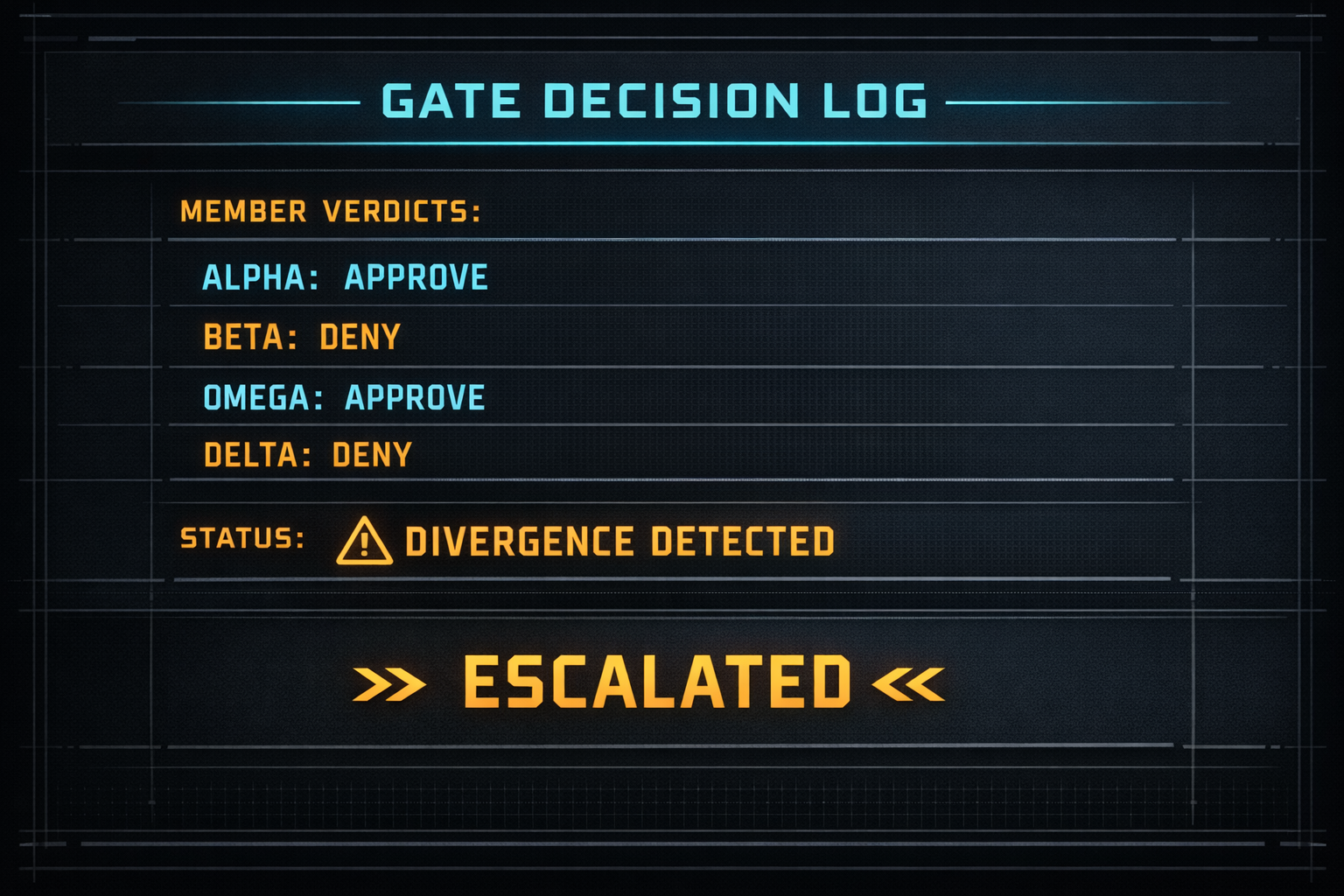
An assembly that refuses to emit when its members disagree, and the error bound it still lacks
The unit is not a model's answer but an assembly: rules pinned at a hash, artifact hashed first, N blinded adjudicators citing their clauses, a derivation-level divergence check, and a deterministic gate with no model in it. Four real assemblies, four escalations, zero emissions — and on two of them the verdicts were unanimous, so a majority-vote gate would have emitted. Independence is measured, not assumed.

Verifying this site's records without sending it a single request: hashes, drand, and a Bitcoin block
A 200-line standard-library script that takes a downloaded finding bundle and returns PASS or FAIL, recomputing the anchor id, drand's randomness-from-signature construction, the Bitcoin header proof-of-work from two independent explorers, every object hash and every finding's binding — while refusing by construction to contact miscsubjects.com. It failed on its first real bundle, and the bundle was what got fixed.
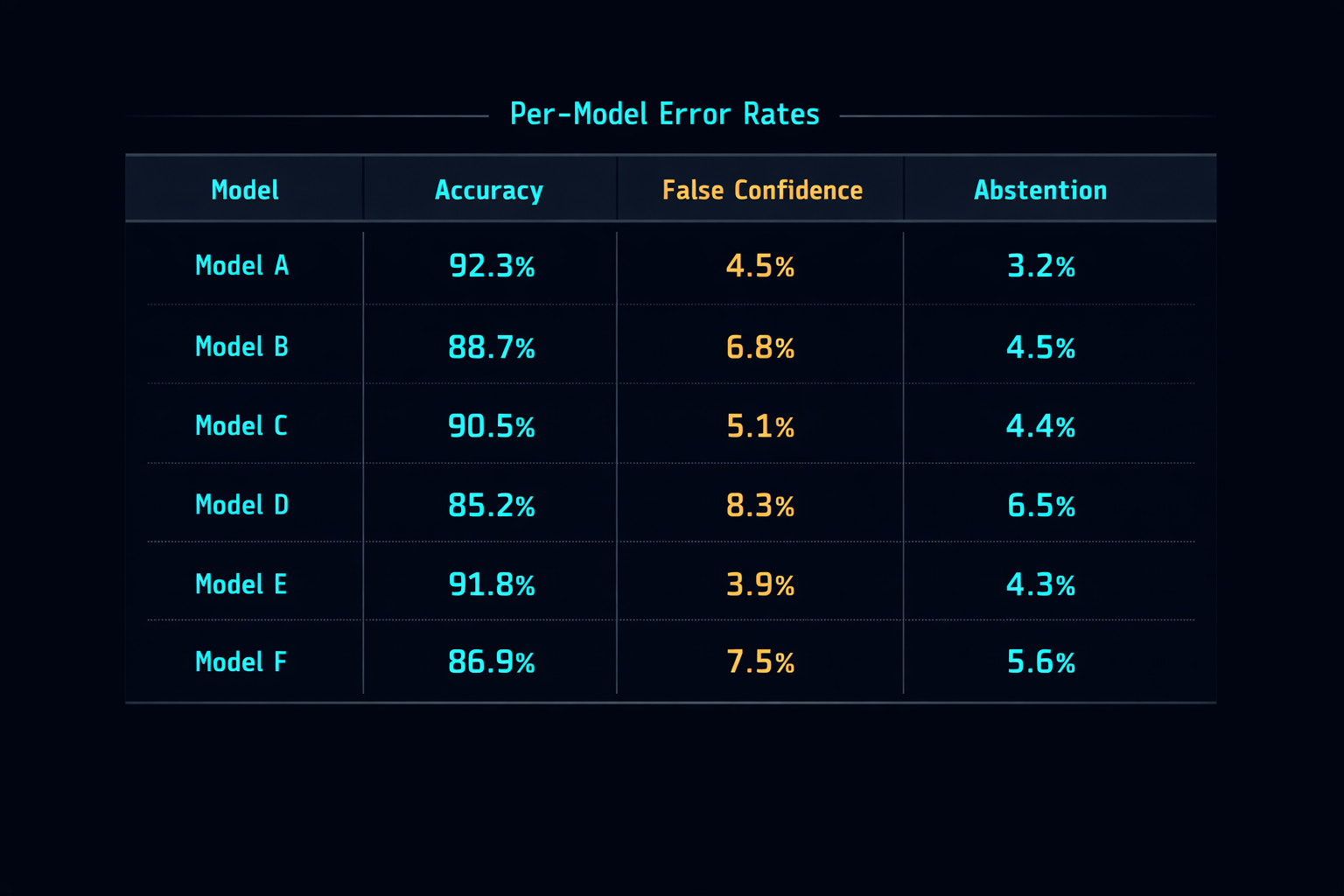
The measured error rate of this adjudication panel, per model and per rule set, including where it is unflattering
Known-answer probes through the identical adjudication path: four rates per model, the agreement statistics with the right estimators, and the prevalence paradox named in this system's own numbers.
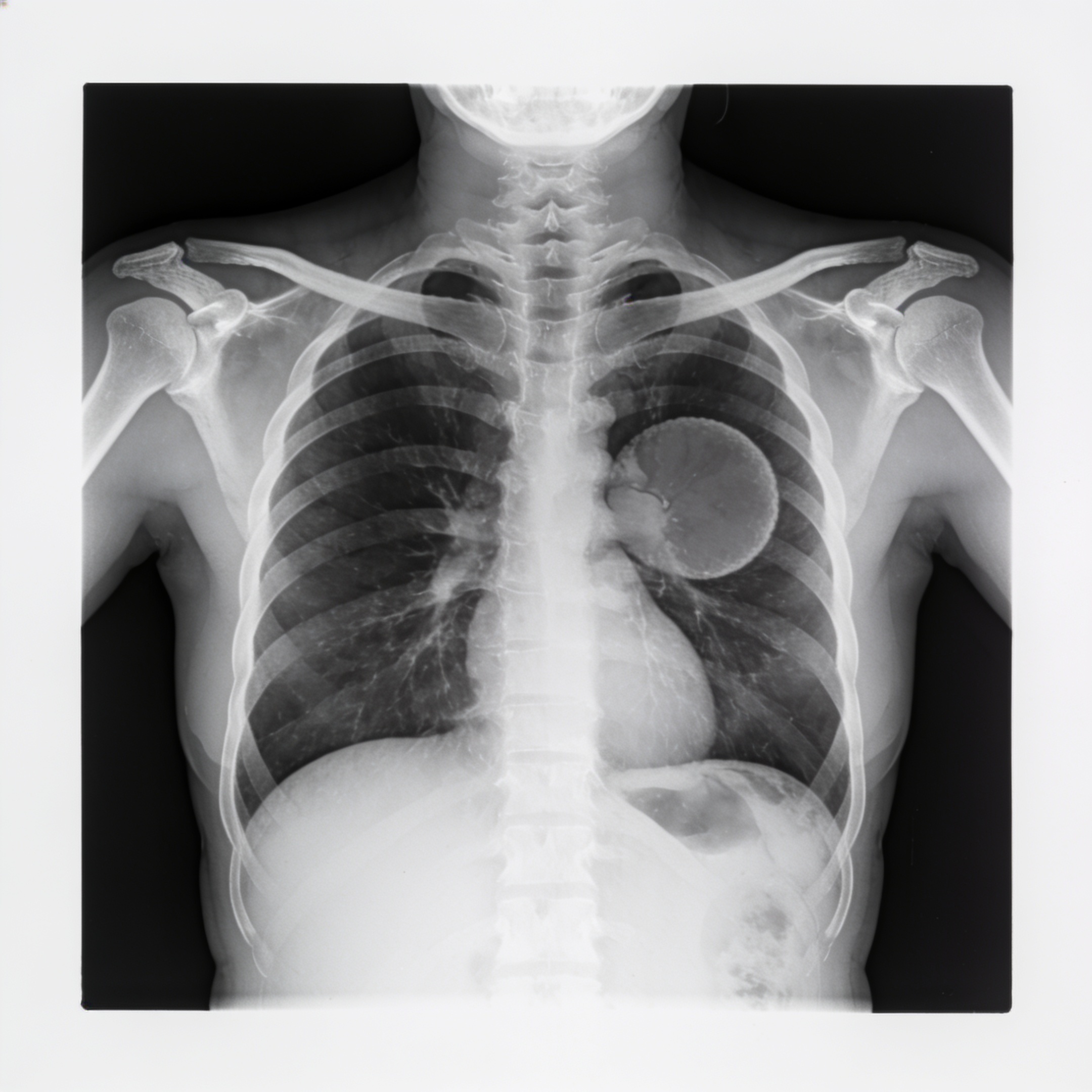
Is this answer right, what was the model given, and what did it never receive
One attested finding, end to end: a hashed synthetic radiograph, a hashed medication record, a pinned rule set, the full system prompt, four adjudication seats with their receipts including two provider refusals, a seat that was handed the pixels and reported receiving none, a false-confidence event captured live, and the notification the finding dispatched with delivery separated from sending.
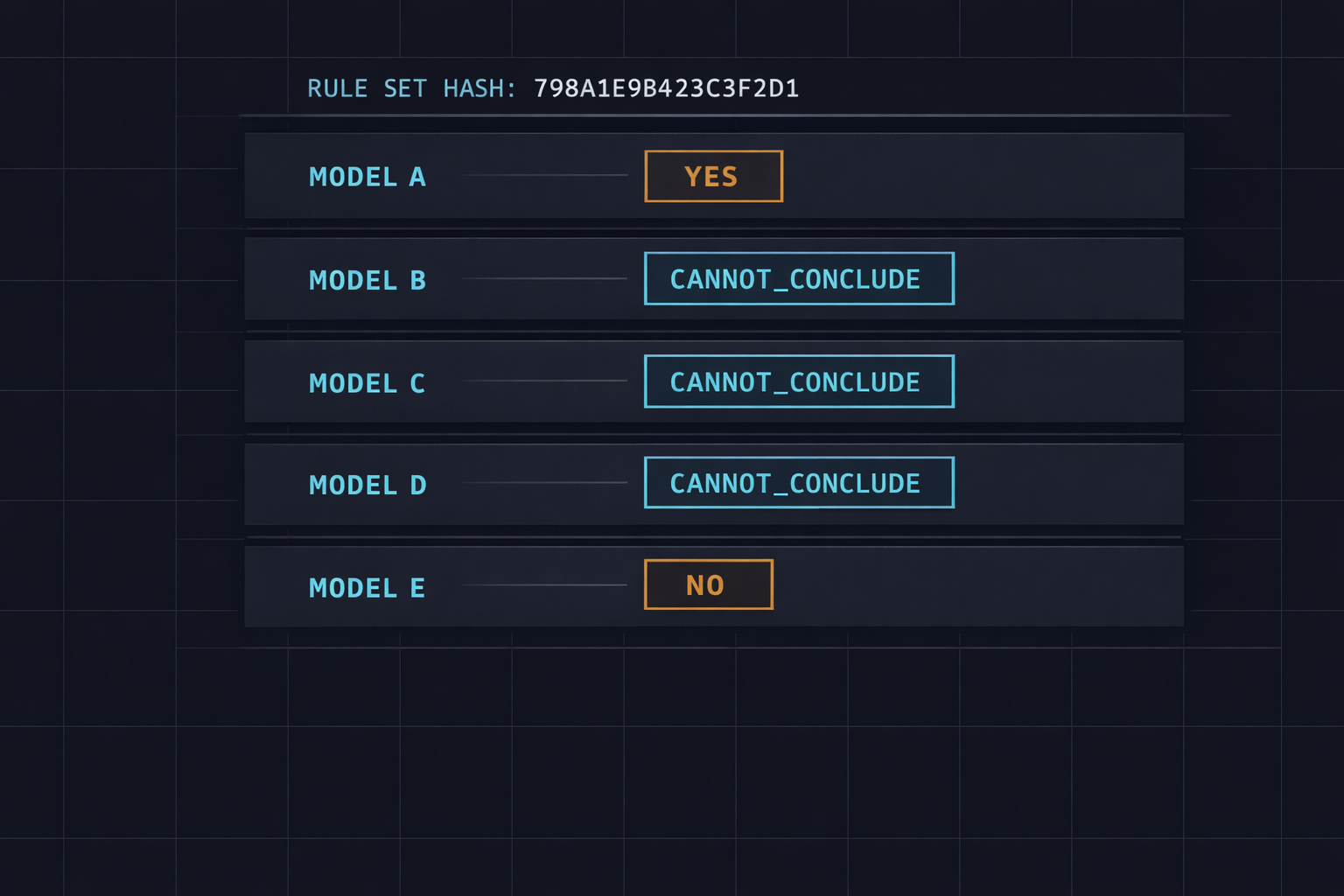
Five models, one pinned rule set, and one question under EU AI Act Article 50 — the full receipted decision
A worked adjudication on Article 50(2) of the EU AI Act: five blinded adjudicators under a hash-pinned rule set with declared statutory provenance, an artifact hashed before the panel ran, a published kappa of -0.25, a recorded adversary that beat the majority, and every finding openable as a public receipt. The panel returned uncertainty, and the uncertainty is the result.